

Swiss Digital Finance Conference 2026, Digital Sovereignty Index, E-ID, and Digital Trust: Artificial intelligence, blockchain, digital identities, quantum computing, and new data infrastructures are often viewed as separate technological trends. In practice, however, these developments are increasingly beginning to converge.
This is precisely where the Swiss Digital Finance Conference 2026, hosted by Lucerne University of Applied Sciences and Arts on September 24, 2026, in Rotkreuz, comes in.
Under the theme “Technology Convergence – Redefining the Financial Architecture,” representatives from the financial sector, technology, academia, and the professional world will discuss what happens when individual innovations give rise to a new digital architecture.
But as technological interconnectivity increases, another question takes center stage:
To what extent do companies still retain sovereignty within these new digital structures?
This question leads directly to the next initiative from the Lucerne University of Applied Sciences and Arts: the Digital Sovereignty Index 2026, whose results will be presented on October 6, 2026, in Rotkreuz and discussed with representatives from business, technology, and academia.
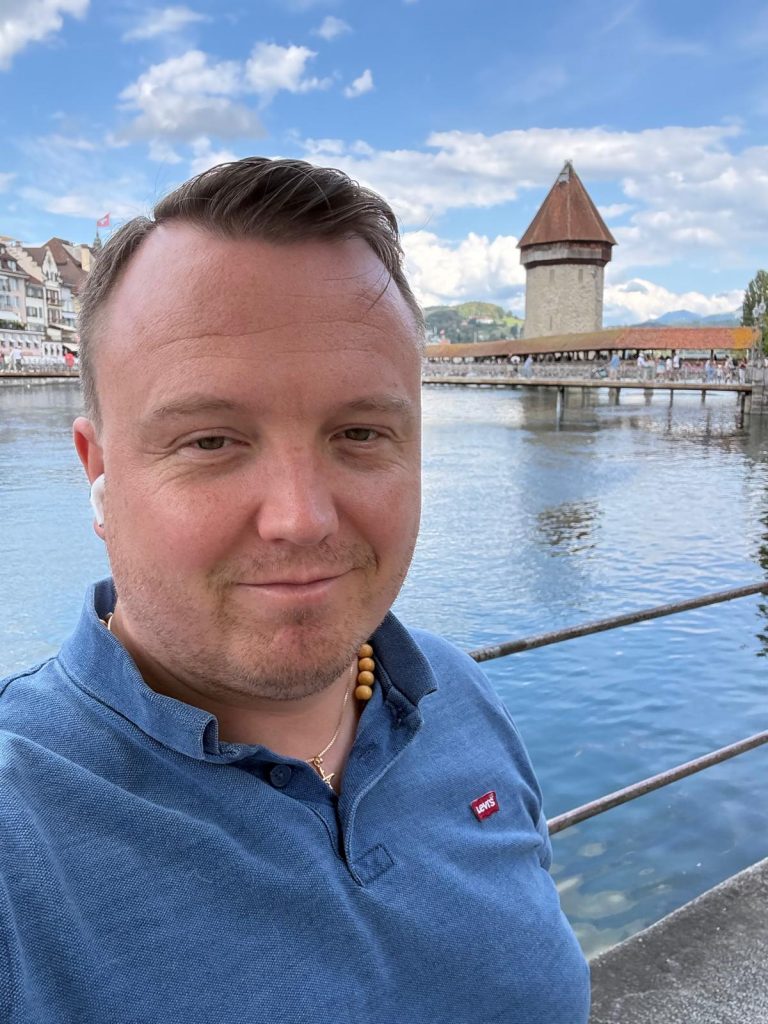
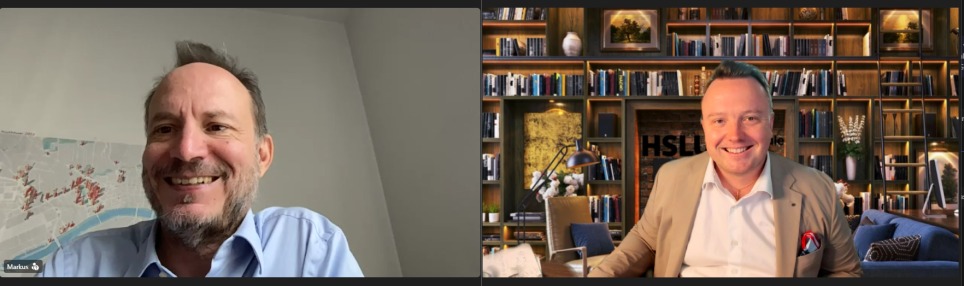
Markus Hill discusses the connection between these topics with Jan Carlos Janke, a lecturer in the Digital Business & Innovation program at Lucerne University of Applied Sciences and Arts – Computer Science, project manager of the Swiss Digital Finance Conference, co-director of the Digital Sovereignty Index, and co-program director of the new CAS Digital Identity & Trust program.
Hill: Mr. Janke, why do you think we need a Swiss Digital Finance Conference at all? There are already numerous banking, fintech, and technology conferences.Janke: That’s precisely why. Many events focus on individual aspects: AI, blockchain, digital assets, cybersecurity, fintech, or regulation. Our basic premise is different: The truly relevant changes are increasingly emerging at the intersections of these technologies. The financial industry isn’t simply experiencing another wave of digitization. We’re seeing a combination of artificial intelligence, highly automated processes, blockchain and distributed ledger infrastructures, digital identities, new forms of digital assets, and, looking ahead, quantum computing. The crucial question, therefore, is no longer just: Which technology will prevail? Rather: What happens when these technologies interact with one another and, through “ ,” enable new business models, processes, and market structures? This is precisely the perspective we aim to facilitate with the Swiss Digital Finance Conference.
Hill: Is that why the theme for 2026 is “Technology Convergence – Redefining the Financial Architecture”?
Janke: Exactly. We don’t want to discuss technology as an end in itself. AI, for example, can automate processes, analyze information, and prepare decisions. Blockchain and distributed ledger technologies can create new transaction and ownership structures. Digital identities and verifiable proofs, in turn, can clarify who or what is actually acting within digital processes and with what authorization. If, in the future, autonomous AI agents also trigger transactions or carry out business processes independently, these questions will become even more important. This quickly takes us from individual technologies to architecture: How do we design financial systems in which data, identities, assets, and automated actors can interact securely and trustworthily with one another?
Hill: With Damir Bogdan, you’ve secured an expert in business transformation, AI, and quantum computing as a keynote speaker. What do you expect from his presentation?
Janke: His keynote, “Technology Convergence – AI, Quantum Computing, and the Race for Execution,” offers a perspective that’s important to us: Technological capabilities alone do not create a competitive advantage. What’s becoming increasingly crucial is the ability of organizations to meaningfully combine different technologies and translate them into scalable business models and processes. In my view, this also shifts the focus of management. It’s not enough to know which technologies might become relevant. Companies must be able to decide where to invest, which capabilities they want to control themselves, which ecosystems to leverage, and where dependencies are acceptable. And that brings us right to the topic of digital sovereignty.
Hill: Is that the connection to the Digital Sovereignty Index?
Janke: Yes—and that’s exactly why I don’t view the two events in isolation from one another. The Swiss Digital Finance Conference first asks: How is technological convergence changing the architecture of the financial system? A few days later, the Digital Sovereignty Index poses the follow-up question: How capable of acting and how self-determined are companies within this increasingly complex digital architecture? Together with our industry partner ti&m, the Lucerne University of Applied Sciences and Arts is using the Digital Sovereignty Index to examine how Swiss organizations assess digital sovereignty and what capabilities are necessary to achieve it. Among other things, this involves strategic and technological dependencies, data, infrastructure, governance, and the ability of organizations to shape their digital transformation in a self-determined manner. On October 6, 2026, we will present the results to the public for the first time and discuss them with experts from the fields of business, technology, and academia. Our goal is not to engage in an abstract debate about technological independence. Companies will continue to use international technology providers, cloud infrastructures, platforms, and specialized software in the future. The crucial question is rather: Where does an efficient division of labor give rise to a strategically problematic dependency—and does an organization still have sufficient options, expertise, and control to act autonomously?
Hill: What role do digital identities play in this context?
Janke: A very central one. We’re moving toward digital ecosystems where it’s no longer just people interacting with one another. Companies, government agencies, platforms, machines, and—increasingly—AI agents must all have roles, permissions, and credentials. Digital identity therefore means far more than just logging in or authenticating. With the Swiss e-ID, the swiyu Wallet, the federal government’s trust infrastructure, and verifiable credentials, an infrastructure is currently emerging that will make trustworthy digital interactions significantly easier and more automated. We are engaged with this development both in research and across various ecosystems, including within the context of DIDAS—theDigital Identity and Data Sovereignty Association—and the DIDAS Launchpad for the swiyu Ecosystem. The fundamental idea behind this is important: People and organizations should be able to use digital credentials reliably without having to exchange complete data sets with every interaction or rely on central platforms as the sole authority of trust. For me, this is a good example of how digital sovereignty does not mean isolating oneself technologically. On the contrary: sovereignty arises through choice, interoperability, and thoughtfully designed digital ecosystems.
Hill: You’re now incorporating these topics into continuing education programs at Lucerne University of Applied Sciences and Arts.
Janke: Yes. For me, this is exactly where the circle closes between research, practice, and continuing education. In the Digital Business & Innovation program at the Lucerne University of Applied Sciences and Arts, we explore how digital technologies are transforming business models, processes, and entire organizations—and how companies can actively shape this transformation. We deliberately focus on more than just individual technologies. We examine the interplay between technology, business models, innovation, organization, and digital ecosystems. A new component within this field is the CAS in Digital Identity & Trust, which I co-direct with Prof. Dr. Oliver Gilbert. Here, we examine digital identities, e-IDs, wallets, and verifiable credentials from more than just a technological perspective. Equally important are business models, governance, trust frameworks, interoperability, digital ecosystems, and digital sovereignty. After all, companies will need specialists and executives in the future who can bring these different perspectives together. Ultimately, this follows the same logic as the Swiss Digital Finance Conference: technology, business, and governance can be viewed less and less in isolation from one another.
Hill: Why is the financial sector particularly interesting in light of this development?
Janke: The financial industry is probably one of the sectors where this convergence is particularly evident. Banks already have complex identity, compliance, and transaction infrastructures in place. At the same time, new opportunities are emerging through AI, tokenization, digital assets, automated business processes, and digital credentials. Imagine, for example, a more highly automated financial process in which not only a customer’s identity is verified, but also their affiliation with a company, authority to act on behalf of the company, or regulatory documentation can be verified digitally and in a machine-readable format. If such documentation is available in an interoperable format, processes can be fundamentally reimagined. If we look ahead and combine this with AI agents, another dimension emerges. Then we must not only know who a person is, but also: On whose behalf is a digital agent acting? What powers does it have? And on what basis is it authorized to initiate a specific transaction? These are questions that touch on technology, governance, liability, regulation, cybersecurity, and trust all at once.
Hill: Frankfurt and Switzerland are two major financial and innovation hubs. Where do you see opportunities for greater collaboration?
Janke: Plenty. I worked in Frankfurt for several years myself and find the two ecosystems to be highly complementary. Frankfurt boasts an enormous concentration of banks, asset managers, regulatory bodies, infrastructure companies, and institutional investors. Switzerland, on the other hand, has a strong innovation ecosystem centered on fintech, blockchain, digital assets, digital identities, and new digital trust infrastructures. That’s why, especially when it comes to topics like tokenization, AI in the financial sector, digital identity, or digital sovereignty, it’s worthwhile to exchange ideas across national and ecosystem boundaries. Technological transformation doesn’t stop at national borders anyway. In my view, the Swiss Digital Finance Conference on September 24 offers an ideal platform for this.
Hill: What should participants take away from the Swiss Digital Finance Conference?
Janke: Ideally, not just a list of new technologies. I want them to recognize the connections. Which technologies are beginning to reinforce one another? What new business models are emerging from this? What infrastructure is needed for this? Where are new dependencies arising? And what capabilities does my organization need to build today so that it can still make autonomous decisions tomorrow? If, the next morning, someone in the company doesn’t ask: “Do we need AI, blockchain, or quantum computing now, too?” but instead: “How does the combination of these developments change our future architecture and our strategic options?” then we’ve achieved a great deal. And the discussion doesn’t end on September 24. On the contrary. I see the Swiss Digital Finance Conference on September 24 and the presentation of the Digital Sovereignty Index on October 6 as two stages of the same discussion. The first event focuses more on the technological future of financial architecture. The second provides a data-driven assessment of where we stand: How well are Swiss organizations prepared for precisely this future—and how sovereignly can they actually shape their digital transformation? In between lie topics such as e-ID, digital identities, verifiable credentials, swiyu, AI, the cloud, blockchain, and new digital ecosystems. It is precisely this connection between technology, business, and transformation that also defines the Digital Business & Innovation program at Lucerne University of Applied Sciences and Arts and the new CAS in Digital Identity & Trust. What ultimately ties all these topics together is a central management question: How do we leverage the opportunities of an increasingly interconnected digital world without losing control over our own ability to act? This is exactly what the financial sector, technology companies, academia, and policymakers should be discussing together right now.
About Jan Carlos Janke
Jan Carlos Janke is a lecturer in the Digital Business & Innovation program at Lucerne University of Applied Sciences and Arts – Computer Science.
He is the project manager of the Swiss Digital Finance Conference, co-director of the Digital Sovereignty Index 2026, and co-program director of the CAS Digital Identity & Trust program.
His work lies at the intersection of digital finance, technological innovation, digital identities, blockchain, digital assets, digital ecosystems, and digital sovereignty.
About Markus Hill (Swiss Digital Finance Conference 2026)
Markus Hill is an independent asset management consultant and has been active for many years as a specialist author, moderator, and interviewer at the intersection of asset management, the fund industry, and the financial sector.
Further Information
Swiss Digital Finance Conference 2026 – September 24, 2026
Swiss Digital Finance Conference
Digital Sovereignty Index – Presentation and Discussion on October 6, 2026
HSLU Research Area: Digital Business & Innovation
Dialogue & Information:
FINANZPLATZ FRANKFURT AM MAIN on LINKEDIN – CHANNEL
FRANKFURT AM MAIN FINANCIAL CENTER on LINKEDIN – GROUP
FUND BOUTIQUES on LINKEDIN – CHANNEL
FINANZPLATZ-FRANKFURT-MAIN.DE, DACHLI Region & FONDSBOUTIQUEN.DE (2026) – Topics, Interests, Dialogue (Selection & “Snapshots”)
February 25, 2026, Frankfurt – “Frankfurt am Main Financial Center Meets Wealth Management”
(Markus Hill – Moderators: Christian Neuhaus – FINVIA, Sven Karkossa – Capitell Vermögens-Management AG, Noel Zeh – Wunderland Capital)
February 26, 2026, Frankfurt – “Forum for Digital Assets (FDV)”
Editorial Team – Special Feature “Frankfurt am Main Financial Center Meets Wealth Management & Digital Assets”
(Interviews / Guest Contributions, “Support” & MORE: info: markus-hill.com)
March 17, 2026, Frankfurt – Private Markets Excellence Forum – “Private Markets, Family Offices & Foundations – Due Diligence & Outlook 2026”
(Markus Hill – Fireside Chat: J. Paulo Dos Santos – Managing Director, VIRATIO GmbH)
Interview with Christian Hommens – SMART IMPACT INVESTING & PRIVATE MARKETS
Spring 2026: Investor Study “Preferences of Institutional Investors in Real Estate & Alternative Investments”
(Markus Hill – Moderator, Podcast: Sebastian Thürmer, “artis & x” – Example 2025)
April 16, 2026 – “köln let’s talk” – Bettina Timmler – Real Estate & Dialogue
(Media Partnership)
May 12, 2026, Frankfurt: “Value Investing & Commodities & MORE”
(Markus Hill – Moderator & brief introduction “Fund Boutiques & the U.S. Formula” – Alex J. Rauschenstein & Urs Marti, SIA FUNDS AG – FINANCIAL CENTER SWITZERLAND)
June 17, 2026, Zurich: Insights – “Family Offices & Fund Boutiques” – The Mountain Talks Summit – FUNDPLAT
(Presentation – Markus Hill)
September 24, 2026, Lucerne: “Swiss Digital Finance Conference 2026” – Markus Hill (PARTNER) speaks with Jan Carlos Janke, lecturer in Digital Business & Innovation at Lucerne University of Applied Sciences and Arts – Computer Science
November 10, 2026, Frankfurt: “Frankfurt am Main Financial Center Meets Liechtenstein Financial Center”
(Markus Hill – Moderator – LAFV Liechtenstein Investment Fund Association: Panel & Presentations)
Input, ideas, and suggestions on the topics mentioned above are welcome:
info@markus-hill.com / +49 (0) 163 4616 179
Photo: Pixabay