Rubén Zárate in conversation: Attitude, background, and the art of genuine encounters
Hill: Rubén, you have touched many people with your posts on LinkedIn. But let’s start at the beginning: Where does your story actually begin?
Zárate: I am 58 years old – although I hardly notice it. I feel much younger, perhaps because I am still curious and keep moving.
I was born in Lima, Peru, but I spent my childhood in the highlands, in a small Andean village called Pachacayo, at an altitude of 3,800 meters. Life there was simple but intense: clear air, vast silence, alpacas, sheep, poverty – and strong bonds.
In 1975, my father took part in a two-year management course, which is why we moved as a family to Germany and Switzerland. During this time, we lived in various cities: Saarbrücken, Düsseldorf, Zurich, Solothurn, and Derendingen. I was eight years old. After that, we returned to Lima, where I attended the German School. At the age of 23, I came to Germany alone to study and stayed behind.
Since then – or rather, my whole life – I have moved between worlds: geographically, linguistically, culturally. These spaces between worlds continue to shape me to this day.
As a Peruvian citizen, my life in Germany was marked by uncertainty for a long time. It was very difficult to obtain a work permit, clarify documents, and claim rights. It was a life of fear and powerlessness—because others were making decisions about your life. In 2007, I finally took German citizenship. To do so, I had to give up my Peruvian passport. It was a painful but conscious step.
Hill: What were your first years in Germany like?
Zárate: Challenging. I was curious, but also uncertain. The language was foreign to me, the codes unspoken. I had to observe a lot, listen, and find my place. But I also learned early on how valuable it is to be able to move in different worlds. This ability to adapt without compromising myself has helped me throughout my life.
Hill: As a young man, you studied business administration in Germany and held many different positions. What guided you in this?
Zárate: An inner urge to get ahead. Not in the sense of a career at any price, but in the sense of understanding, helping to shape things—but also surviving. I worked at the headquarters of a German bank, then briefly in New York. After that, I worked in sales at FAZ, in call centers, in consulting firms such as Willis Towers Watson – and at some point also in the fashion industry with my own brand and designs. My collections were even sold at KaDeWe in Berlin, Alsterhaus in Hamburg, Galeries Lafayette, and at Loden-Frey and Ludwig Beck in Munich – and even in duty-free shops at major airports. I never believed in the one perfect career path. I believed in development.
Hill: Were there also phases when you had doubts?
Zárate: You bet—lots of them, in fact. Especially during transitional phases. When you don’t know what’s coming next, you often feel small. But I’ve learned that it’s precisely in these moments that the most important thing grows: confidence in yourself. And a different kind of success—one that can’t be measured in titles, but in attitude. The wonderful thing was that I kept meeting people who believed in me. That allowed me to pick myself up again and again.
Hill: Fashion is a completely different field. What attracted you to it?
Zárate: Style, identity, expression. Clothing is more than fabric—it’s attitude. And especially as someone who lives between worlds, I find clothing exciting. In addition to my job in the social sector, I am currently working on a new men’s collection made of alpaca that combines my roots and my current life. I tell my story in it. It’s not just about fashion, but about the narrativity of origin and elegance.
Hill: How did you come up with the idea of using alpaca?
Zárate: Alpaca is an animal from my childhood in the highlands of Peru. My father was the managing director of a large company with around 2,000 employees that produced and exported alpaca and sheep wool as well as meat. For me, alpaca wool represents warmth, naturalness, and luxury at the same time. I wanted to create something that wasn’t loud but had character— , like many people I admire. This collection is not a mass-produced product, but an expression of an attitude: less, better—and with soul.
Hill: Today, you work full-time at the Franziskustreff Foundation. How did that come about?
Zárate: Brother Paulus, the chairman of the Franziskustreff Foundation, approached me in the middle of the coronavirus crisis. I wanted to do something meaningful. Today, as a philanthropic advisor, I support people who want to help institutionally or privately—and those who need help. I see myself as a bridge builder between two realities: those who can give and those who need to receive. Together with a great team, we organize breakfast for around 180 guests every morning and offer social counseling, and have been doing so for over 32 years. None of this would be possible without the help and trust of our donors.
It is quiet but profound work. I talk to donors, companies, guests – and often to myself. It’s about more than material help. It’s about dignity, equality, and trust.
Hill: What do you take away from these encounters?
Zárate: Gratitude. And humility. I have learned that not everyone who lives on the street is broken. And not everyone in a suit or business attire has clarity. I try to incorporate these stories into my everyday life – including on LinkedIn. I don’t share success stories there, but quiet stories of heroism. The world needs more of that.
Hill: And when you’re not working?
Zárate: Then I live a secluded life—in the middle of the forest, in an old farmhouse in the Taunus mountains. Without luxury, but with soul. I enjoy cooking and baking, meeting good friends. I love country life, the rhythm of nature, the wood, the animals. This place gives me peace and grounding. It’s where I recharge my batteries. It’s where I listen—to myself and to the world.
Hill: You also organize private dinners. What’s that all about?
Zárate: They are small evenings with special people. Bankers, artists, people from social projects, lawyers, creative types. I invite them to a table in an honest atmosphere. There is good food, honest conversation, no titles. Everyone pays for themselves.
When I invite my guests, they know that I am able to bring together people with heart and substance. For me, this is the art of connection in action. And often, change begins when people simply sit across from each other – without an agenda.
Hill: You have a certain calmness about you. Where does that come from?
Zárate: Maybe from the highlands. Or from many conversations with people who have lost everything and still smile. Or from the knowledge that I don’t have to be the center of attention—but rather what develops between us. I believe in silence as a quality.
And perhaps also because I had a brain tumor at the age of 35 and underwent surgery. When you experience this firsthand—how quickly everything can change, how suddenly you become dependent and helpless—it changes your outlook on life. Since then, I have been living more consciously, more intensely, more thoughtfully. And above all: more gratefully. Perhaps that is also why my closeness to God has grown – not through constant church attendance, but through silent prayers. Especially during my walks in the forest. There I feel connected – without many words, but with an open heart.
But you mustn’t forget: I am Latino. And I definitely inherited my temperament from my mother. As my friends and colleagues can confirm, I am not always quiet. I can be very loving, but also direct and spirited. That’s part of who I am. And I don’t want to deny that. And yes – I’m not always quiet, but I’m always genuine.
Hill: What does Frankfurt mean to you?
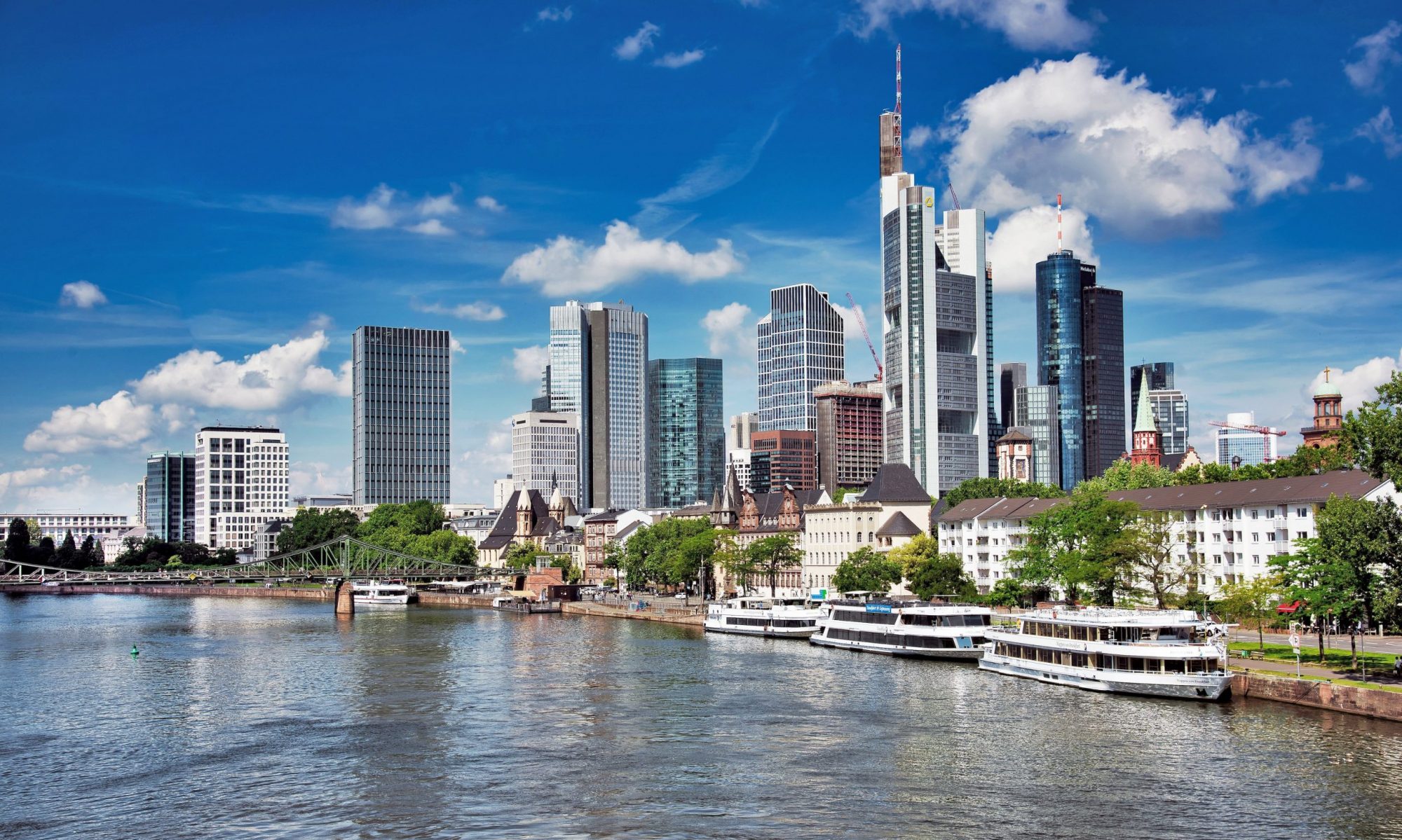
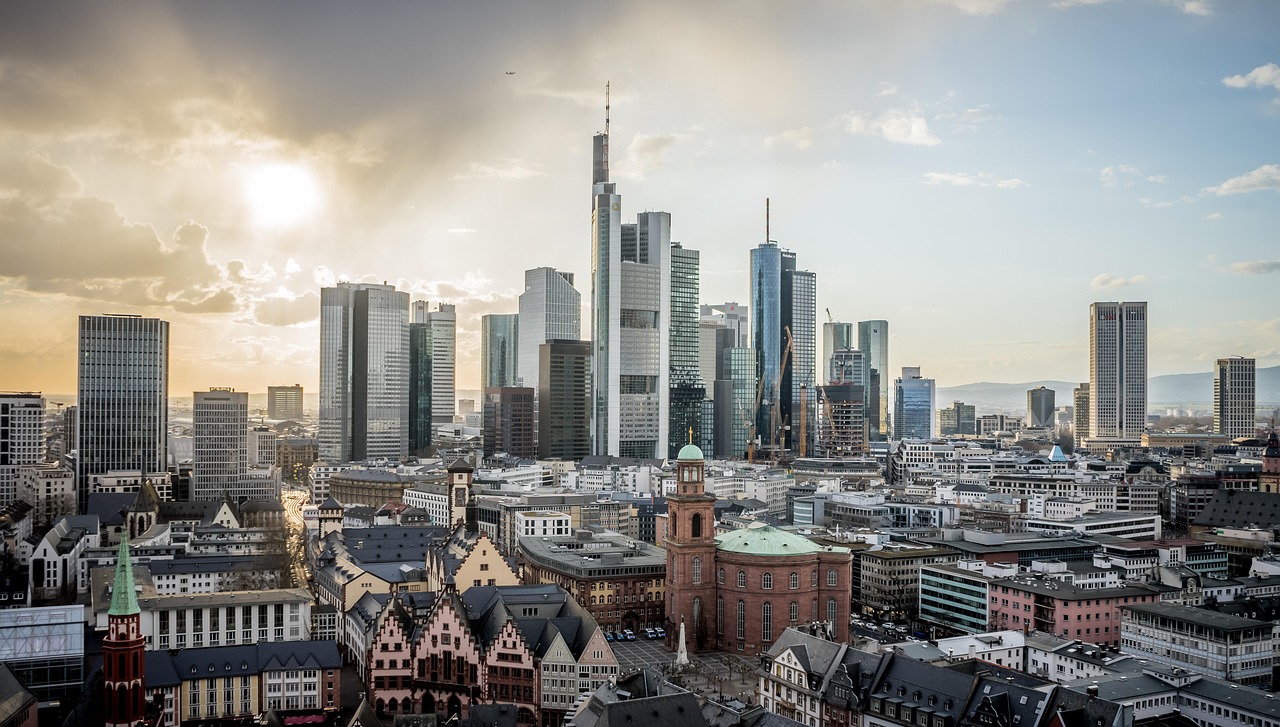
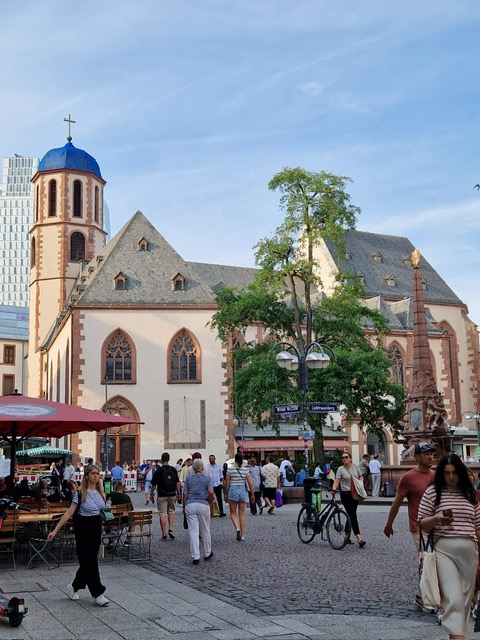
Zárate: A lot. I’m also a Frankfurt native. It’s my city. I’ve often had to reinvent myself here. I’ve experienced advancement, built bridges, but also experienced loneliness. Frankfurt is tough, but honest. And there are people who really listen. I try to pass that on – whether in conversations, over breakfast at Franziskustreff, or in the evening over a glass of wine with friends.
Hill: You are a member of the expert advisory board of the Software AG Foundation’s „Fonds auf Augenhöhe“ (Fund on Equal Terms). What does this role mean to you?
Zárate: It is an expression of trust. We support projects that treat refugees as equals. For me, this is not just voluntary work, but an attitude. I myself came to a new country as a child. I know how quiet you can become when you don’t know if you belong. It’s about creating spaces where people are not only included in the thinking, but also in the feeling. I am convinced that origin is a commitment. And that’s how I live my life.
Hill: You often talk about attitude. What does that mean to you specifically?
Zárate: Attitude is when you remain upright even when no one is watching. It is the sum of experience, values, and courage. It means not going along with everything that is “ “ – but doing what is right. I believe that this plays an important role, especially in the financial center of Frankfurt. Perhaps more than ever.
And attitude is also evident in small things: when people say they’ll get back to you – and don’t. When offers are made, and nothing comes of them in the end. Especially in a city like Frankfurt, where many people trade on their expertise and present themselves brilliantly, I see this time and time again. For me, this is telling: those who are not reliable in small things will also find it difficult in big things. I’m not saying this reproachfully – but as an invitation to not only think about attitude, but to live it. Everyone talks about values today. But they must also be lived in everyday life – otherwise they remain empty words.
Hill: What do you wish for the future?
Zárate: More space. Less noise, more listening. And for people to learn to be with each other again – without an agenda. I want spaces for resonance, not just for reaction.
Hill: And for the Frankfurt financial center?
Zárate: Less mask, more attitude. And a table where there is room not only for numbers, but also for stories. I wish that humanity and sensitivity were not considered softness – but competence.
Hill: Rubén, thank you very much for the interesting and open conversation.
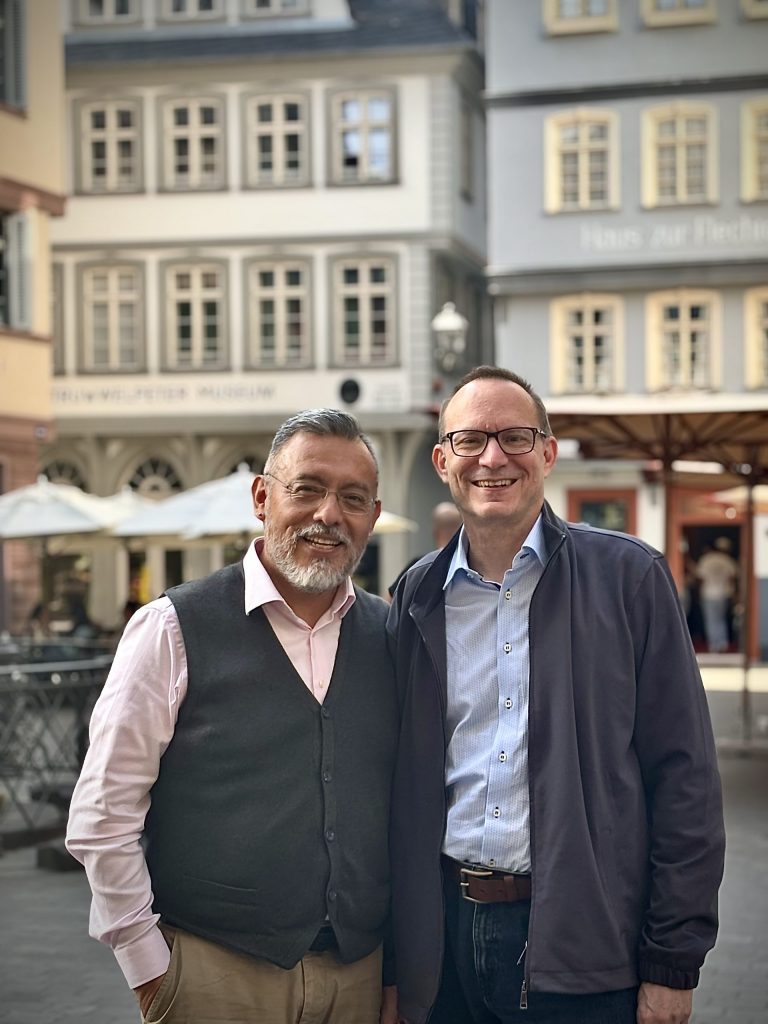
Zárate: Thank you, Markus, who says you can’t talk about attitude, dignity, fashion, and maybe even alpacas in the Frankfurt financial center? It was a real pleasure.
LINK / INFORMATION ABOUT THE FRANKZISKUSTRFF FOUNDATION
Dialog & Information:
FINANZPLATZ FRANKFURT AM MAIN auf LINKEDIN – KANAL
FINANZPLATZ FRANKFURT AM MAIN auf LINKEDIN – GRUPPE
FONDSBOUTIQUEN auf LINKEDIN – KANAL
Foto: PIXABAY & Markus Hill/Rubén Zárate