Europe, history, challenges, and networking – Markus Hill spoke with FEK-EUROjournal’s editors-in-chief, Wolfgang Otto and Dieter Brockmeyer, for FINANZPLATZ-FRANKFURT-MAIN.DE. The journal serves as the publication of the Association for the Promotion of European Communication, chaired by the Regensburg-based urologist Otto. Every two years, the association awards the Emperor Charles V European Medal, named after a figure widely regarded as the first “European” and one with deep historical ties to Frankfurt.
Traditionally, the award ceremony takes place during the European Days held in the local castle of the tranquil Franconian community of Neudrossenfeld, located near the baroque residential city of Bayreuth. Laureates of the medal include renowned figures of European integration such as Jacques Santer, Otto von Habsburg, and Hans-Dietrich Genscher.
The conversation focused on the association’s work and the future of the journal’s ambitious online magazine. Frankfurt local Dieter Brockmeyer, co-founder and innovation expert at the globally active Diplomatic World Institute in Brussels, explained why his voluntary involvement with the magazine is particularly meaningful to him.
Hill: I’ve noticed some exciting activities by the Fördergesellschaft für Europäische Kommunikation e.V. (FEK). Mr. Otto, you are the chairman of this Nuremberg-registered association. How did it come into being, and what are its goals?
Wolfgang Otto: In the late 1990s, a handful of South German individuals with a strong commitment to Europe brought together by my predecessor, the journalist Peter Verbata (1942–2018), who fled Prague for Nuremberg in 1968, asked themselves how they could accompany the forthcoming EU enlargement to the East in a positive way. This is still very visible today in the annual “German-Czech Colloquia” and also in the name of an award our association has been presenting since 2001 to outstanding figures in the process of European unification: the “FEK European Medal of Emperor Charles IV.” Named after the 14th-century ruler of the Holy Roman Empire of the German Nation, who came from the House of Luxembourg, was King of Bohemia, and spent a large part of his life in the region between the imperial cities of Prague and Nuremberg where our association is based .The medal is awarded every two years as part of the European Days, which we largely co-organize. These European Days, the colloquia and, not least, the FEK EUROjournal today form the essential pillars of our voluntary, nonprofit work.
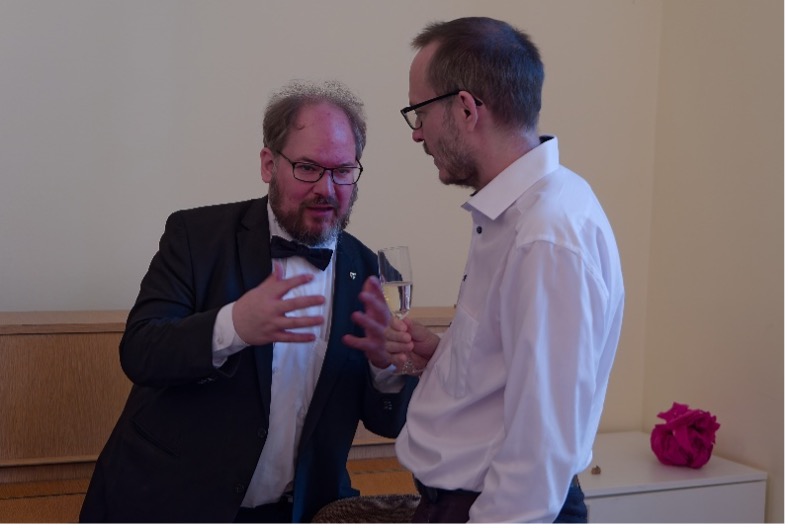
Wolfgang Otto, FEK-EUROjournal & Markus Hill
Dieter Brockmeyer: I would like to emphasize that the DACH region bears a particular responsibility for Europe, Germany alone on account of its history, and the region as a whole due to its central location within the EU and its economic weight. I include Switzerland and Liechtenstein here. Both are small to very small, but with exceptionally strong economies, Liechtenstein for instance in the financial sector. While neither is a formal EU member, both are tightly connected through the EEA. That naturally influences our work. In this context, it is also worth mentioning that Prince Michael of Liechtenstein, cousin of Prince Hans-Adam II, was the predecessor of our current association president. The importance of the DACH region’s central position can be seen in the significance of Frankfurt, not only as a European financial center alongside Paris and Amsterdam but also as a major transport hub, including digitally…
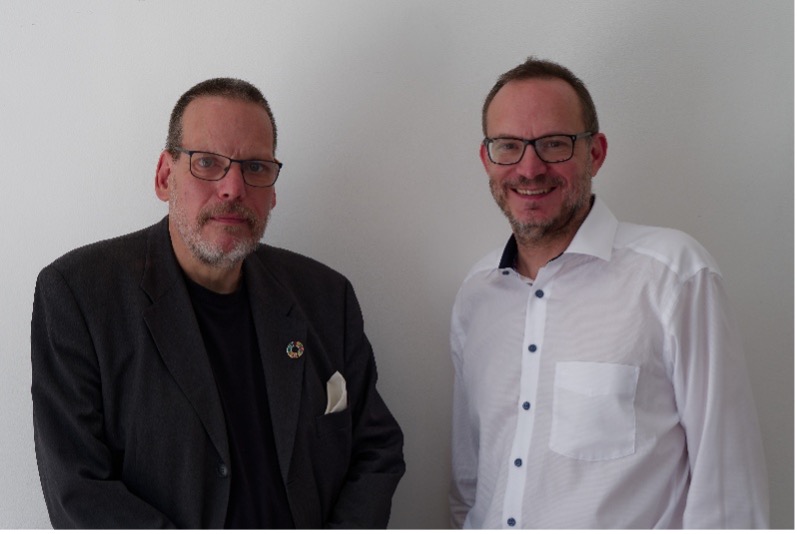
Dieter Brockmeyer, FEK-EUROjournal & Markus Hill
Hill: You mentioned the award—tell us more. There is now quite an impressive list of distinguished laureates.
Wolfgang Otto: The figure of Emperor Charles IV who, in Germany, stands somewhat in the shadow of Charlemagne on the one hand and his descendant Charles V on the other, but who in our neighboring country is regularly voted “the greatest figure in history”—fits our own era remarkably well because he, too, lived and worked in a time of profound upheaval. Just mention climate change and the threat of epidemics, and you might think you were in our own age. The “Little Ice Age,” which began during Charles’s lifetime, was no less disruptive than global warming is today, and the plague was a far more devastating catastrophe than the recent COVID-19 pandemic. At the same time, Charles founded Central Europe’s first university in Prague in 1348 and—something that historians often held against him—maintained outward peace through a mixture of trust in God and a touch of cosmopolitanism. (He was among the most linguistically gifted and educated emperors in history.) In this sense, he has—implicitly or explicitly—served as a model for many of the statesmen and personalities to whom we have awarded the medal over the decades. Without making any ranking, I personally think of Theo Waigel and Otmar Issing, pioneers of the euro; the last imperial and royal crown prince and true democrat Otto von Habsburg; Lithuania’s “liberator” Vytautas Landsbergis; Gyula Horn, Karel Schwarzenberg and Hans-Dietrich Genscher, all of whom played major roles in bringing down the Iron Curtain; and EU Commission President Jacques Santer, who in 2003 was the first to receive the European Medal during the “Neudrossenfeld European Days.” Since the DACH region was mentioned: we have also honored important figures from this region, such as former Liechtenstein government member Thomas Zwiefelhofer and Austrian EU Commissioner Franz Fischler.
Hill: I’m hearing about Neudrossenfeld for the first time—where is it, and how did you find this partner?
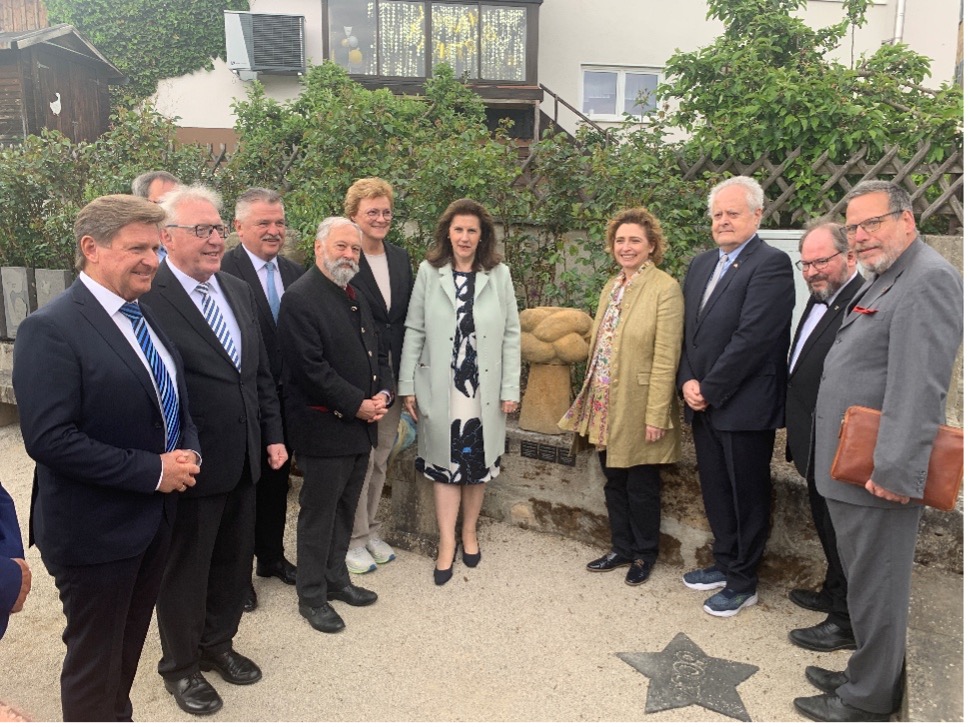
Wolfgang Otto: Neudrossenfeld is a small, very romantically situated village in the Red Main Valley between Bayreuth and Kulmbach in Upper Franconia. It has since been designated an official “European Municipality,” as we have been holding the European Days there since 2003. “We,” that is the FEK, the municipality of Neudrossenfeld, the district of Kulmbach and the Chamber of Commerce and Industry for Upper Franconia in Bayreuth. A former managing director of that Chamber, Dr. Hans Kolb (1955–2024), a dedicated FEK supporter from the start, identified this village of his childhood and its castle, renovated by the longtime head of the SchmidtBank, which once shaped the region, as a perfect venue. Every two years in spring, a “focus country” is presented in its many facets. Most recently, in May 2025, the Grand Duchy of Luxembourg, arguably the most European of European states, in my view. The FEK European Medal on that occasion went to two outstanding women with ties to the country: Luxembourg’s ambassador to Germany, H.E. Sylvie Lucas, and Nicola Beer, the Wiesbaden-born German Vice President of the European Investment Bank and former senior politician.
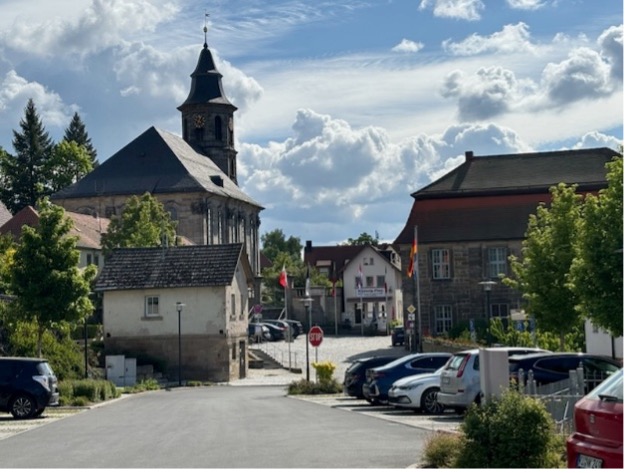
Dieter Brockmeyer: With the castle, its hall and gardens offering exceptional views of the Red Main meadows, the Bräuwerck and a surprisingly ornate church for a village of this size, all within close proximity, Neudrossenfeld provides a truly unique atmosphere. I recently spoke with our latest laureate, who was very impressed by the setting. Unfortunately, the regional hospitality industry suffered greatly during COVID, which does pose challenges for us in organizing the event.
Hill: You also publish your own information medium, the EUROjournal. What is its purpose?
Wolfgang Otto: As a large share of our members came – and still come – from business journalism and the media sector, launching a European information and documentation publication in 1999, the “EUROjournal pro management,” was a rather natural step. Over the years, the focus on economic topics has perhaps receded somewhat in favor of general political themes as well as cultural and philosophical content. But for the FEK and its EUROjournal, raising awareness of the economic foundations that secure prosperity—and thus the success of a united Europe—remains crucial. Cooperation with other organisations committed to European integration is becoming ever more important, and we report on their activities in the EUROjournal. Promoting European communication—true to the name of our association—remains our mission. By way of example, at very different levels, I might mention the Diplomatic World Institute, the Paneuropean Union or the regionally active Academy of Eastern Bavaria–Bohemia. I myself joined the team in 2008 as a physician and passionate small-scale publisher and writer on various topics and—now serving as head of the editorial office for eight years—am deeply grateful for the experienced colleagues supporting me, not least Dieter Brockmeyer, who after many years on our editorial board has generously agreed to strengthen the editorial leadership.
Dieter Brockmeyer: FEK founder Peter Verbata managed to attract truly notable European pioneers of the first generation to the EUROjournal, I’m thinking, for example, of the former Vice President of the European Parliament and father of the European flag, Ingo Friedrich, who publishes regularly and frequently serves as a laudator. Of course, we face a challenge as these founding figures become fewer and we have to attract new authors. It took some time, but it’s now going quite well. Our platform’s technical development is also far from finished. A genuine friendship has developed between Wolfgang Otto and me over the years, and despite the limited time budgets typical of volunteer projects, our collaboration works extremely well.
Hill: So it’s purely an online platform?
Dieter Brockmeyer: For special occasions, such as the European Days, we still produce printed editions, albeit slim ones. We intend to expand that again, because printed magazines still have advantages in certain contexts. Despite all the momentum toward digital, I am convinced that print will continue to exist and may one day grow again as a niche product. Of course, it’s a matter of funding and of timing. So we’re proceeding carefully.
Wolfgang Otto: Rising costs for layout and paper made the EUROjournal—originally launched as a quarterly print publication—untenable in that form. But I fully agree with Dieter Brockmeyer: a well-produced printed piece that you can hold in your hands still has value, and while we embraced the digital aspect rather late, our goal remains to bring out at least one tangible issue each year.
Hill: So it will continue to expand?
Dieter Brockmeyer: The online platform, definitely—and we’re not losing sight of print. With fresh authors, we will continue sharpening the EUROjournal’s profile and opening up new target groups. That is clearly our aim.
Hill: Mr. Brockmeyer, with the Diplomatic World Institute you co-founded, you have a very international orientation. What motivates your involvement in the EUROjournal?
Dieter Brockmeyer: I’ve been connected with the FEK for a long time—since 2012, I believe, longer than with the DWI. I worked as a journalist for many years, and this gives me the opportunity to keep nurturing that. When we founded the DWI in 2019, the overlaps quickly became apparent. It makes sense to expand them, for example through cross-promotion. My EUROjournal column “The Wise Old Man” also gives me space to express my views much more broadly than is possible within the institute. The title is intentionally tongue-in-cheek. I can also put forward theses for debate, which later feed directly into my DWI work, such as my books on innovation resilience. It all fits together very well. For our innovation video podcast Today & Tomorrow, although it is in English, we’ve also gained an additional distribution channel. Those are just a few examples.
Hill: What are your future goals—for the FEK, for the awards, and for the online magazine?
Wolfgang Otto: The European Days and the German-Czech Colloquium should continue and, where possible, be expanded, because the acceptance of the European idea is once again under pressure. That is something we thought we had overcome by 2010. Back then, we introduced the “FEK Freedom Ring” as an additional award for private individuals active in European exchange across various fields. Making these contributions, achievements and personalities, many of which risk being overlooked in today’s so-called mainstream media, visible is one of the reasons why the EUROjournal will remain an essential component of the FEK portfolio.
Dieter Brockmeyer: Europe faces enormous challenges, many of them self-inflicted. It needs reminders and support to ensure that this great idea does not run aground. There is plenty of work to do in the coming decades. We accept this responsibility, fully aware that we are only a small voice, but one among many. Together we become a chorus, much louder and, hopefully, able to contribute to preserving and strengthening the European project.
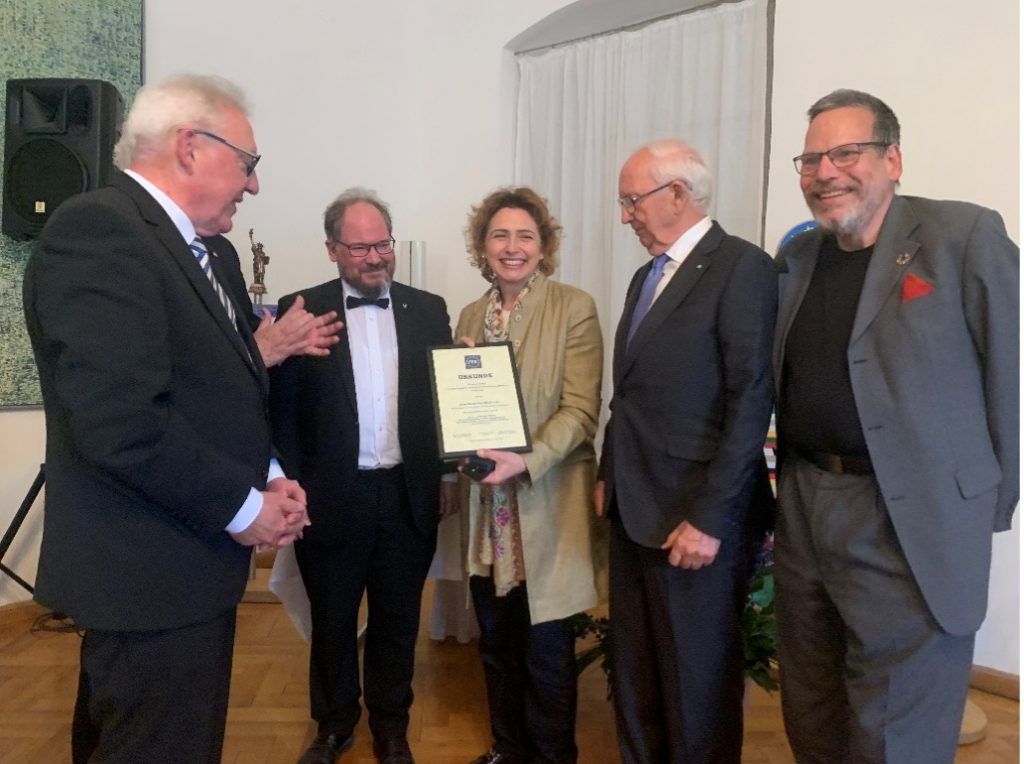
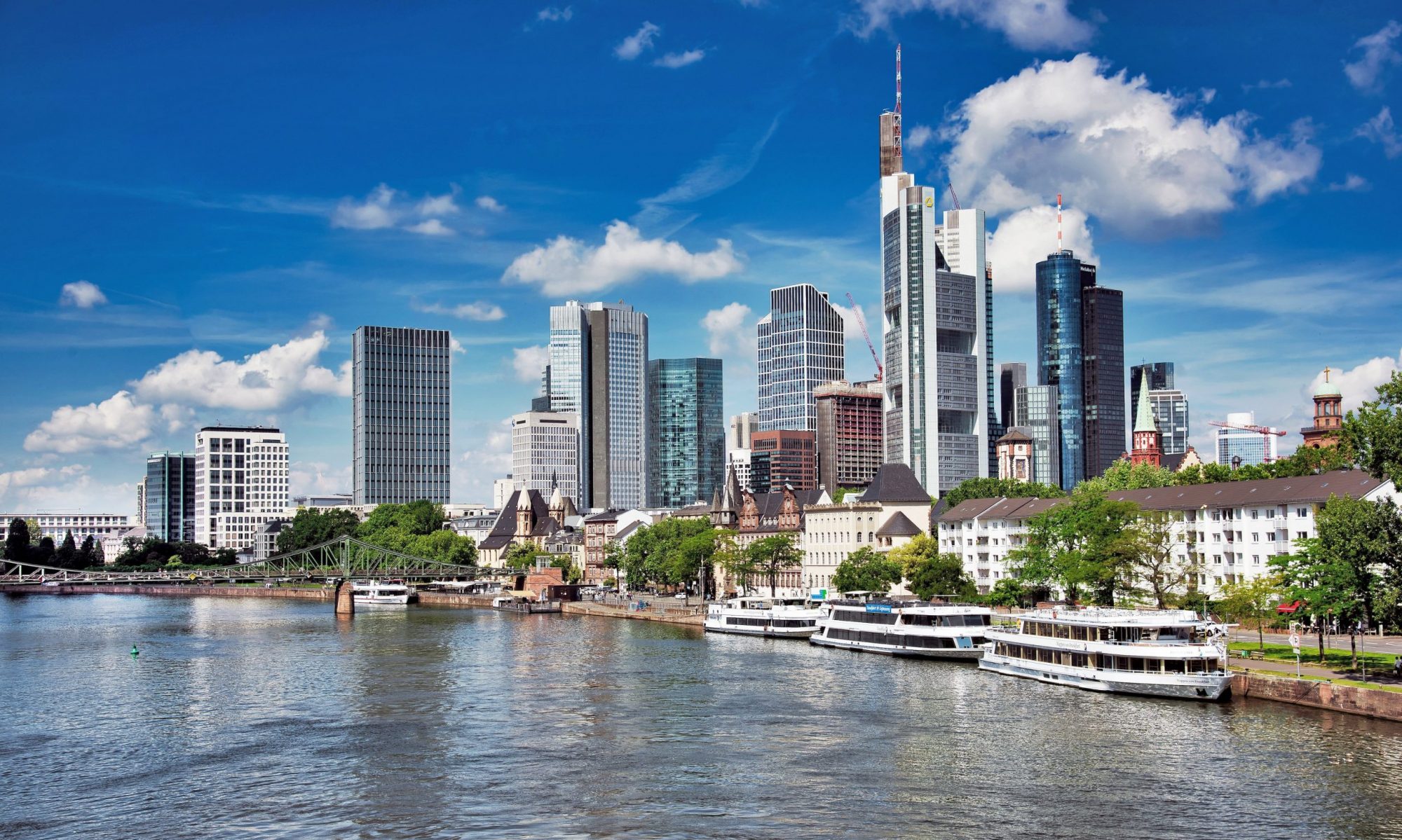
Frankfurt is becoming increasingly important in our work, not only because it’s where I live but due to its central significance for Europe. It’s no coincidence that Nicola Beer received the European Medal this year. Her European journey took her to Brussels and now to Luxembourg, but her home has always remained the Rhein-Main region.
Hill: Thank you for the conversation. I look forward to seeing you again in the “Village of Skyscrapers” in 2026!