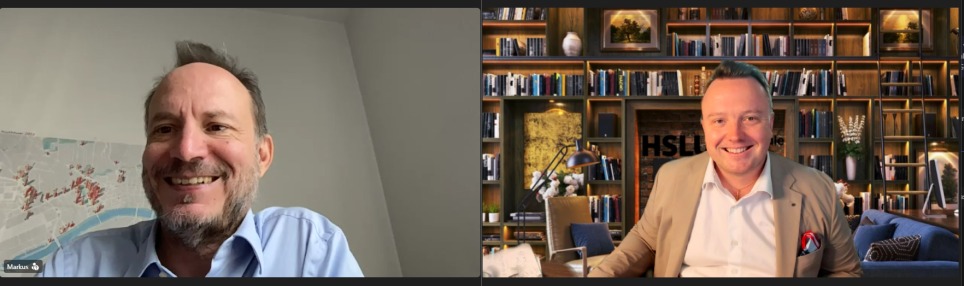
The Frankfurt am Main financial center engages in a discussion with Markus Schwingshackl of PRIVATE KEY NETWORK in Zurich and recommends exchanging ideas with an interesting networker from Zurich. We were happy to take up the challenge. At first glance, business jets, yachts, art, real estate, precious metals, and wealth management seem like separate worlds. In reality, however, they often raise the same questions among entrepreneurial families, private clients, and UHNWIs: Who can you trust? Who understands complex assets? And where can a professionally sound exchange take place beyond traditional industry boundaries?
Tobias Heining is familiar with both the world of major international law firms and the unique requirements surrounding high-value mobile assets. Through the High Value Assets Roundtables, he brings together experts, providers, and influencers from various asset classes. In conversation with Markus Hill, he discusses his unusual career path, the work of Martyn Fiddler, and why a good network thrives not on hoarding but on sharing.
Hill: From studying history to the world of major law firms to business jets and yachts—a résumé you could hardly make up. Who is the person behind it all, and what makes him tick?
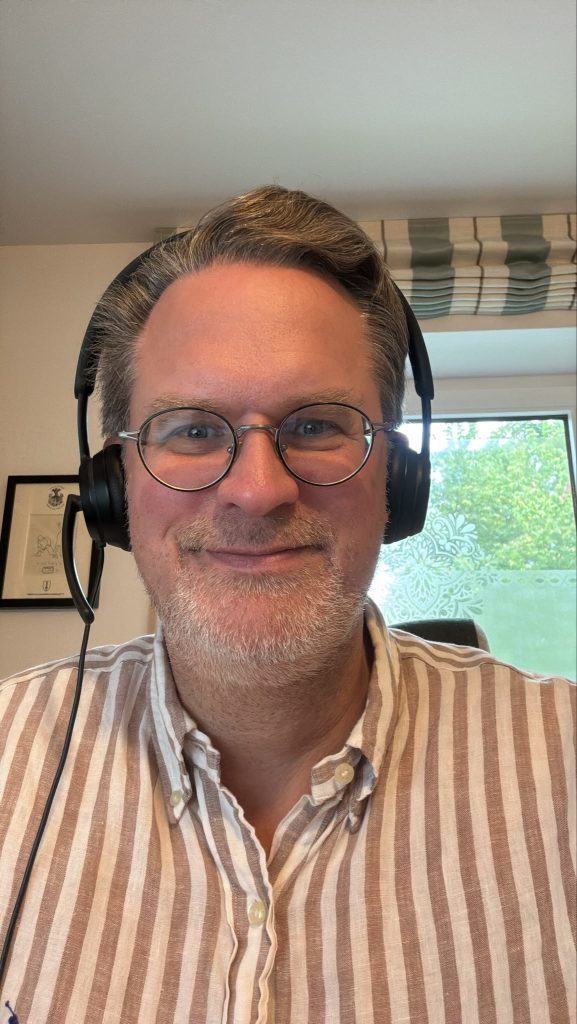
Heining: When I earned my master’s degree in 2001, I started working at a PR agency that, among other things, advised major law firms and accounting firms on public relations matters. At the time, that was still a relatively niche but exciting and challenging field of work. From there, my path led me to the client side, working with major U.S., British, and German law firms. There, I held various positions, eventually leading large teams with corresponding budget responsibility in the areas of business development, marketing, and communications.
It’s not a big leap from business development and strategic positioning to innovation, new business models, and more efficient processes and administrative functions. As a leader, I want to understand markets, structures, and processes and drive change to make a company fit for the future. In the age of artificial intelligence, this is likely one of the central challenges. This is precisely what motivates me: I see myself as a strategist, networker, and innovator.
Despite my enthusiasm for change, a human touch and maintaining my personal integrity have remained important to me. At first glance, these may not always seem entirely compatible. The move into business aviation and yachting came as a surprise to me as well. However, it has proven to be a particularly refreshing and enriching experience. The DNA of these industries is fundamentally collaborative and characterized by a high degree of pragmatism and openness. That requires a great deal of mental flexibility—and that’s exactly what I like.
Hill: Business aviation and yachting sound exciting, but also a little nebulous. What exactly does the company you work for do?
Heining: “Vague” is a nice word to use in this context. We help our clients safely navigate some of the pitfalls of business aviation and yachting. For more than 40 years, Martyn Fiddler has been a boutique firm specializing in tailored international solutions—particularly for owners and operators of complex mobile assets such as business jets, helicopters, and yachts.
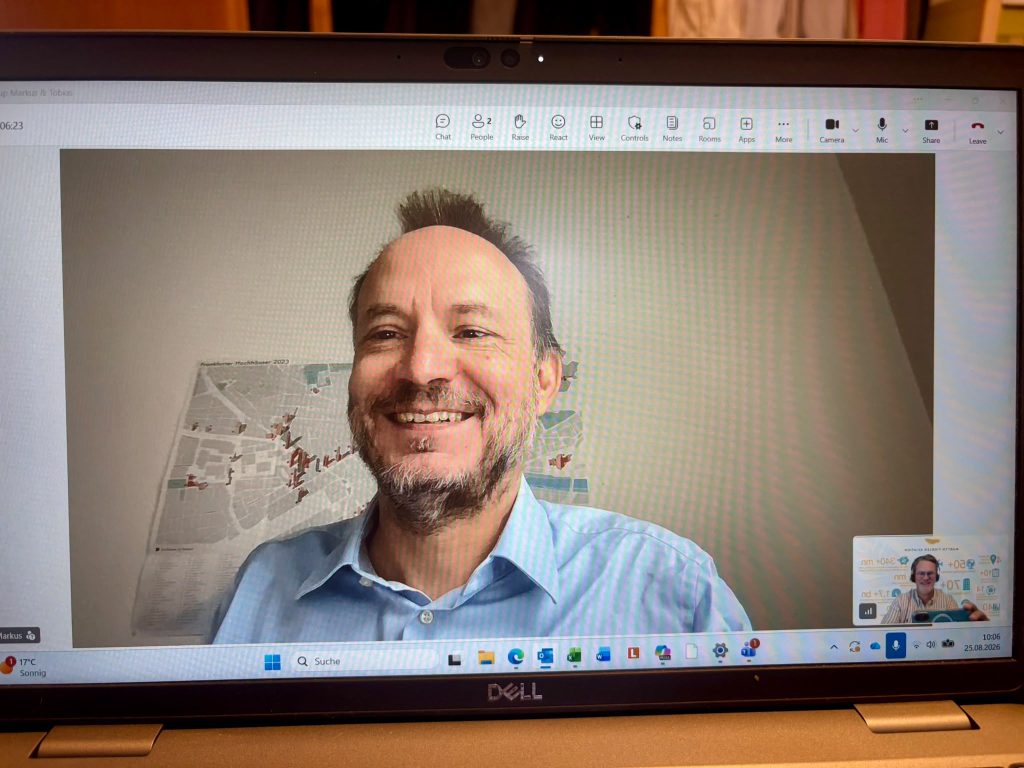
At its core, Martyn Fiddler is a corporate service provider—that is, a provider and administrator of special-purpose entities. In addition, we offer specialized tax consulting and support for all customs-related matters, such as the import and export of assets. We also maintain a global ecosystem of close partners and contacts. This enables us to guide our clients on practical issues beyond our own service portfolio and connect them with suitable professional contacts.
Hill: You’ve earned a reputation as a thought leader, pioneer, and networker in various market segments—for example, in the legal market by being an early adopter of legal technology. Now you’re active in the business jet and yacht sectors. What drives you to innovate, and how did the idea for the High Value Assets Roundtables come about?
Heining: I firmly believe in the power of constructive exchange and the sharing of experiences. For me, the starting point for any networking initiative is therefore always a communication gap between certain individuals or groups. If bridging that gap promises mutual benefits and synergies, a genuine opportunity arises. That was the case when the European Legal Technology Association—ELTA for short—was founded ten years ago, and it was the same with the High Value Assets Roundtables.
The establishment of the first legal tech department at a major German law firm, which I initiated in 2014, was the starting point for me to look beyond the German market. But as is so often the case in Europe, people in Germany knew very little about developments in France, Spain, Italy, the Netherlands, or Central and Eastern Europe—and vice versa. In the United Kingdom, too, there was only limited awareness of developments across the English Channel. With ELTA, we wanted to bring together the various innovators and innovation hubs and create a cross-border platform for sharing experiences.
When I moved into business aviation and yachting in 2023, I quickly realized that although the target audiences overlap significantly and the operational and market-related challenges are similar, there was no structured dialogue between representatives of different asset classes, vendors, and service providers in the luxury, private client, and UHNWI sectors. A corresponding platform was also lacking in the DACH region. With the High Value Assets Roundtables, I wanted to close this gap. I consider this a fruitful approach for all involved.
Hill: What exactly is it about, and what makes the High Value Assets Network interesting?
Heining: The networking platform launched last year with two events in May and October 2025 in Berlin. Two more events have already followed this year: one in April in Germany and one in June 2026 in Austria. Our upcoming event on September 10 in Zurich rounds out this year’s roundtable activities in the DACH region.
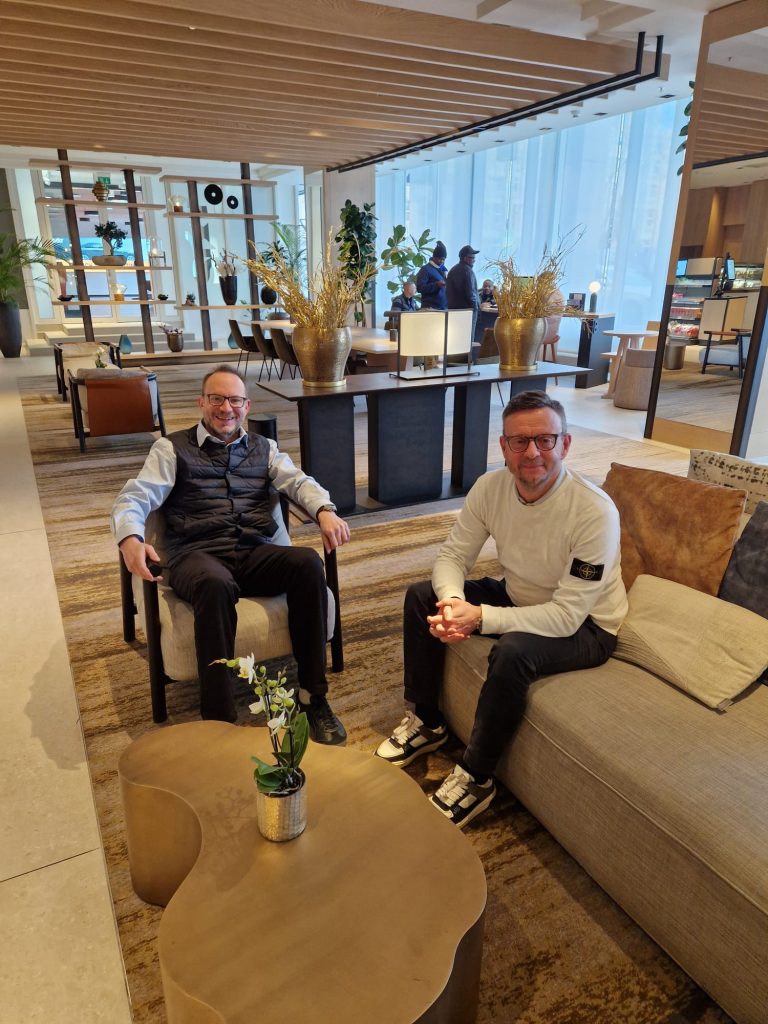
The platform is designed to facilitate and promote professional exchange among representatives of various asset classes, as well as providers and service providers in the luxury, private client, and UHNWI sectors. We all thrive on the strength, breadth, and depth of our networks. At the same time, we rely on trusted influencers with access to the relevant target groups.
At previous High Value Assets Roundtables, guests have represented the fields of business aviation, yachting, real estate, automotive, gemstones and precious metals, wealth management, art and culture, private client services, financing, insurance, law and taxes, as well as security architecture. In addition to topics relevant to these target groups, the discussions consistently focus on the unique characteristics and market specifics of the various asset classes. Equally important is the exchange of experiences regarding comparable operational challenges and potential solutions. In this way, we simultaneously broaden our horizons and expand the reach of our networks.
Hill: Who are the participants, and how can one join?
Heining: At the various events so far, we’ve been able to bring together up to 70 guests. That’s a good size for a networking format. If the group gets any larger, it quickly becomes unwieldy—and I don’t want to turn the format into a conference. The most recent High Value Assets Roundtable near Vienna, however, was significantly larger. That was due to the excellent cooperation with the Austrian Business Aviation Association (ABAA).
The participant group typically consists of experienced representatives from various asset classes, as well as providers and service providers from the aforementioned segments. Two criteria are paramount in the selection process. On the professional side, these include in-depth professional experience and expertise in the luxury, private clients, and UHNWI sectors, a robust network of high-quality contacts, and a willingness to share knowledge and contacts in the interest of all participants.
On the personal side, it’s about embracing new ideas, looking beyond one’s professional horizons, and being willing to expand one’s own experience through friendly exchanges with like-minded individuals. This requires openness, authenticity, a certain degree of humility, and a positive attitude. Sustainable success in a network can only be achieved if one is willing to invest personally and, on occasion, to go the extra mile. Those who wish only to take but not to give do not belong in this network. This likely also applies to people who consider themselves something very special and superior.
Participation is generally by personal invitation from me. I ask those invited to contact me briefly if they’d like to send someone else or suggest additional potential participants. This helps ensure that the exchange of experiences and the quality of the network remain at a consistently high level.
Hill: What are the plans for the future of the network?
Heining: Participants from across the DACH region are already expressly welcome and well-represented at all events. Given the international nature of our markets and target groups, I’d particularly like to further strengthen cross-border networking among these circles. This also includes expanding the network internationally—for example, to London or Monaco. That’s on the agenda, at least for the coming year.
My particular focus, however, remains on attracting new and exciting people to the network and further deepening connections within the individual asset classes and service areas. With a steadily growing network, we will likely also need to consider further professionalizing our structures and, if necessary, adjusting the distribution of responsibilities with potential cooperation partners.
Hill: Thank you very much for the interview. We’re looking forward to the panel discussion with Markus Schwingshackl and wish you every success for the evening in Zurich!
Impression & Philosophy, “Flavor” of the Evening in Zurich (Quote – Tobias Heining):
“As part of our ongoing efforts to encourage meaningful networking among participants, I would be delighted if you could share one question about your business that you would most like fellow attendees to ask you. Rather than a general question such as ‘What exactly does your company do?’ 😌, please consider something more insightful and specific. For example, it could relate to your unique value proposition, the business challenges you help solve, the market segments you serve, or even what really motivates you to go the extra mile or ways in which others could support your business growth.”
Panel Discussion (3:00 p.m., September 10, 2026): Virtual Values – High-Value Assets in the Digital Space
Participants: Moderator: Frank Liemandt is the managing director of the German Helicopter Association and organizer of European Rotors, Europe’s largest helicopter trade show. He is also a professional moderator and created the video interview series “Fly Me to the Top.”
Marco Infuso, Head of Digital Assets Sales for Central Europe, Apex Group.
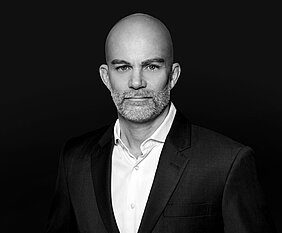
Markus Schwingshakl is a private clients attorney who advises entrepreneurs, family offices, and high-net-worth individuals. He is also a co-founder of the PKN Private Key Network, a network established in 2025 for professionals in the fields of private wealth, digital assets, and AI, which aims to shape industry standards and foster collaboration among experts.
Robin Kretzschmar is the founder of 7Assets. The team strives to simplify and improve asset management through the use of artificial intelligence and to create a platform that serves private investors, financial advisors, and institutions alike, ultimately helping to optimize asset flows.
Hannes Gurzki is a recognized expert in luxury brand management and marketing who teaches at the International University of Monaco, ESSEC Business School, and the Technical University of Braunschweig. As Program Director at ESMT Berlin, he also works with leading global companies and luxury brands from various sectors on value creation strategies. Hannes has previously published an article on “Luxury Brands in the Digital Space” in the Harvard Business Review.
LinkedIn-Profil von Tobias Heining:
Dialogue & Information:
FINANZPLATZ FRANKFURT AM MAIN on LINKEDIN – CHANNEL
FRANKFURT AM MAIN FINANCIAL CENTER on LINKEDIN – GROUP
FUND BOUTIQUES on LINKEDIN – CHANNEL
FINANZPLATZ-FRANKFURT-MAIN.DE, DACHLI Region & FONDSBOUTIQUEN.DE (2026) – Topics, Interests, Dialogue (Selection & “Snapshots”)
February 25, 2026, Frankfurt – “Frankfurt am Main Financial Center Meets Wealth Management”
(Markus Hill – Moderators: Christian Neuhaus – FINVIA, Sven Karkossa – Capitell Vermögens-Management AG, Noel Zeh – Wunderland Capital)
February 26, 2026, Frankfurt – “Forum for Digital Assets (FDV)”
Editorial Team – Special Feature “Frankfurt am Main Financial Center Meets Wealth Management & Digital Assets”
(Interviews / Guest Contributions, “Support” & MORE: info: markus-hill.com)
March 17, 2026, Frankfurt – Private Markets Excellence Forum – “Private Markets, Family Offices & Foundations – Due Diligence & Outlook 2026”
(Markus Hill – Fireside Chat: J. Paulo Dos Santos – Managing Director, VIRATIO GmbH)
Interview with Christian Hommens – SMART IMPACT INVESTING & PRIVATE MARKETS
Spring 2026: Investor Study “Preferences of Institutional Investors in Real Estate & Alternative Investments”
(Markus Hill – Moderator, Podcast: Sebastian Thürmer, “artis & x” – Example 2025)
April 16, 2026 – “köln let’s talk” – Bettina Timmler – Real Estate & Dialogue
(Media Partnership)
May 12, 2026, Frankfurt: “Value Investing & Commodities & MORE”
(Markus Hill – Moderator & brief introduction “Fund Boutiques & the U.S. Formula” – Alex J. Rauschenstein & Urs Marti, SIA FUNDS AG – FINANCIAL CENTER SWITZERLAND)
June 17, 2026, Zurich: Insights – “Family Offices & Fund Boutiques” – The Mountain Talks Summit – FUNDPLAT
(Presentation – Markus Hill)
September 24, 2026, Lucerne: “Swiss Digital Finance Conference 2026” – Markus Hill (PARTNER) speaks with Jan Carlos Janke, lecturer in Digital Business & Innovation at Lucerne University of Applied Sciences and Arts – Computer Science
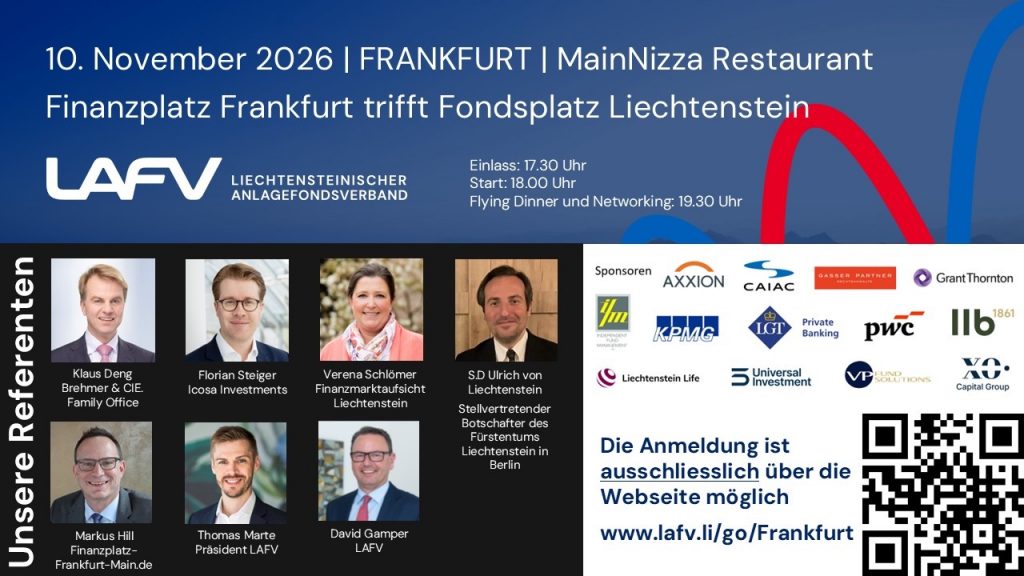
November 10, 2026, Frankfurt: “Frankfurt am Main Financial Center Meets Liechtenstein Financial Center”
(Markus Hill – Moderator – LAFV Liechtenstein Investment Fund Association: Panel & Presentations)
Input, ideas, and suggestions on the topics mentioned above are welcome:
info@markus-hill.com / +49 (0) 163 4616 179
Photo: Pixabay & Finanzplatz Frankfurt