FRANKFURT FINANCIAL CENTER & LIECHTENSTEIN FINANCIAL CENTER: „I am convinced that Liechtenstein will not only continue its growth trajectory over the next five to ten years, but will even accelerate it in the coming years“ (INTERVIEW – David Gamper, LAFV Liechtenstein Investment Fund Association)

Liechtenstein & Frankfurt as financial centers, fund boutiques, family offices, fund domicile, and dialogue in Germany – Markus Hill spoke to David Gamper, Managing Director of the LAFV Liechtenstein Investment Fund Association, on behalf of FINANZPLATZ FRANKFURT about topics such as Liechtenstein’s positioning and cooperation in European competition, trends in alternative investments, and regulation. In addition, given the current importance of fund regulations for family offices and asset managers, he provides a brief overview of the association’s other dialogue offerings in the German financial center in spring 2026 and in London.

Hill: What role does Liechtenstein currently play as a fund location in the European market – is it more of a niche or an up-and-coming fund center?

Gamper: I would describe Liechtenstein as an emerging niche. In Europe, there are two major fund centers, Luxembourg and Ireland, which focus primarily on large, mostly globally active asset managers. White-label funds play a subordinate role there, at least in terms of regulation and supervision. This is exactly where Liechtenstein comes in. The location focuses on optimal conditions for asset managers and fund boutiques that want to launch white-label funds, as well as on asset structuring for wealthy families, often with their own family offices. This is also reflected in the statistics: over 85% of funds domiciled in Liechtenstein are white-label funds, and the trend is rising.

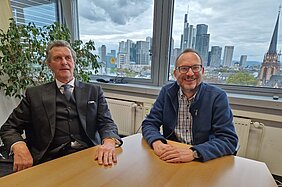
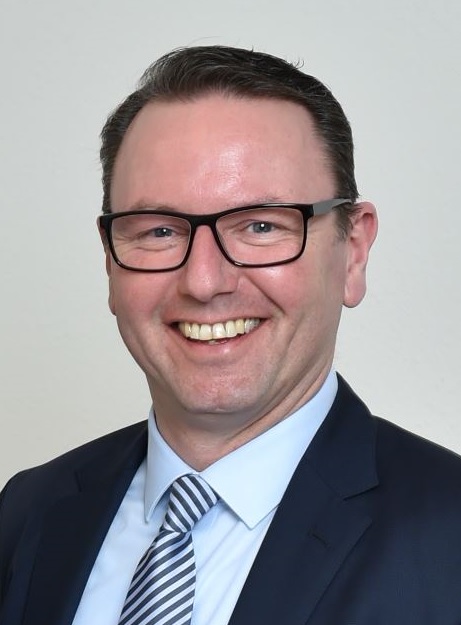
David Gamper, LAFV Liechtensteinischer Anlagefondsverband

Hill: Are you currently launching many funds for family offices in Liechtenstein?

Gamper: Yes, developments in this area have been very positive in the recent past. We are seeing increasing uncertainty among wealthy individuals, triggered by geopolitical tensions, high government debt in Europe, and discussions about possible tax increases. Liechtenstein, on the other hand, has no national debt, has the lowest public spending ratio in Europe – i.e., the ratio of government expenditure to gross domestic product – and therefore no need to raise taxes. In addition, investment funds are completely tax-exempt. Political continuity and the AAA rating further strengthen confidence and make the location particularly attractive for long-term asset structures.

Hill: How is the fund location developing in the area of alternative investments?

Gamper: The alternative investments sector (investments outside stocks and bonds, such as hedge funds or infrastructure) is growing very strongly. Seven out of ten newly established funds are currently alternative investment funds (AIFs, which may include private equity, real estate, and other non-traditional assets). On the one hand, this is because funds for asset structuring (organizing investments and holdings for legal or tax purposes) are almost exclusively set up in this form. On the other hand, AIFs in Liechtenstein benefit from particularly flexible regulation. Liechtenstein has made use of the leeway deliberately provided by the EU and refrained from so-called „gold plating“ (implementing stricter rules than required by the EU), which is often seen in other fund domiciles. Another decisive factor is the Liechtenstein Financial Market Authority (the local financial regulator). Particularly in the case of complex AIF structures, it is very valuable for fund initiators to be able to enter into dialogue with the supervisory authority at an early stage. This cooperative practice is highly appreciated and has already led to the establishment of several funds.

Hill: What risks could slow down Liechtenstein as a fund location in the medium term?

Gamper: Like all fund locations, we are also dependent on geopolitical developments and their impact on the financial markets. We have only limited influence on this, but we must be prepared accordingly. Another risk lies in increasing regulation at the European level (more rules for financial firms working in the EU). Extensive reporting requirements and constant regulatory changes place a significantly greater burden on smaller fund companies, such as those typically found in Liechtenstein, than on large international providers. We clearly support sensible regulation that strengthens investor protection and transparency (making investments safer and more open). In recent years, however, the goal has been overshot in some cases. We therefore hope that the announced „Simplification Package“ (a legislative effort to reduce unnecessary rules) will bring noticeable relief again. We must also remain particularly vigilant in the areas of money laundering prevention and sanctions implementation (measures to stop illegal financial activity and enforce international restrictions). Despite very good results in recent audits (inspections by authorities), we are continuously working on further improvements, because a strong reputation is essential for a small financial center.

Hill: Do you see the shortage of skilled workers as a limiting factor?

Markus Hill, FINANZPLATZ FRANKFURT AM MAIN

Gamper: We are also affected by the general shortage of labor and skilled workers, but this cannot be considered a limiting factor. There are qualified personnel in other financial sectors in the country who are becoming increasingly aware of the fund industry, not least because of its strong growth. In addition, there is growing interest from highly qualified professionals from the nearby financial center of Zurich and from Germany. Overall, we currently see a balanced mix of demand and available talent.

Hill: Where will Liechtenstein be as a fund location in five to ten years?

Gamper: In my view, specializing in white-label funds was the right strategic move. Optimal, and in some cases even unique, conditions have been created for this target group. The growing interest from foreign fund companies also shows that we are on the right track. Following Luxembourg-based Axxion, Dirk Grosshans from Universal Investment also announced at the „Frankfurt Financial Center Meets Liechtenstein Financial Center“ event in Frankfurt on November 18, 2025, that he would be launching funds in Liechtenstein from the first quarter of 2026. Other providers will follow. I am therefore convinced that Liechtenstein will not only continue its growth course over the next five to ten years, but will even accelerate it in the coming years. There will be a lot more positive news to report.

Hill: What events are coming up soon?

Gamper: We will be attending various events in Germany. On January 28 and 29, 2026, we will once again be inviting visitors to engage in dialogue at the FONDS professionell KONGRESS in Mannheim. Interested parties can find out more about Liechtenstein as a fund location at our stand and talk to structuring experts about specific fund projects. In a presentation, a fund founder will report on his highly successful fund project and his positive experiences in Liechtenstein. On April 21 and 28, 2026, we will once again be presenting ourselves at the LAFV events in Munich and Hamburg. Fund founders will report on the unique location advantages of Liechtenstein, and the tax component of Liechtenstein funds will be highlighted. Verena Schlömer from the Liechtenstein Financial Market Authority will provide insights into the licensing and supervisory practices for funds. The next event in London will take place on June 25, 2026. The detailed program is yet to be announced, but the focus will be on the locational advantages and current developments of Liechtenstein as a fund center.

Hill: Thank you very much for talking to us.

Dialogue & Information:

FINANZPLATZ FRANKFURT AM MAIN auf LINKEDIN – KANAL

FINANZPLATZ FRANKFURT AM MAIN auf LINKEDIN – GRUPPE

FONDSBOUTIQUEN auf LINKEDIN – KANAL

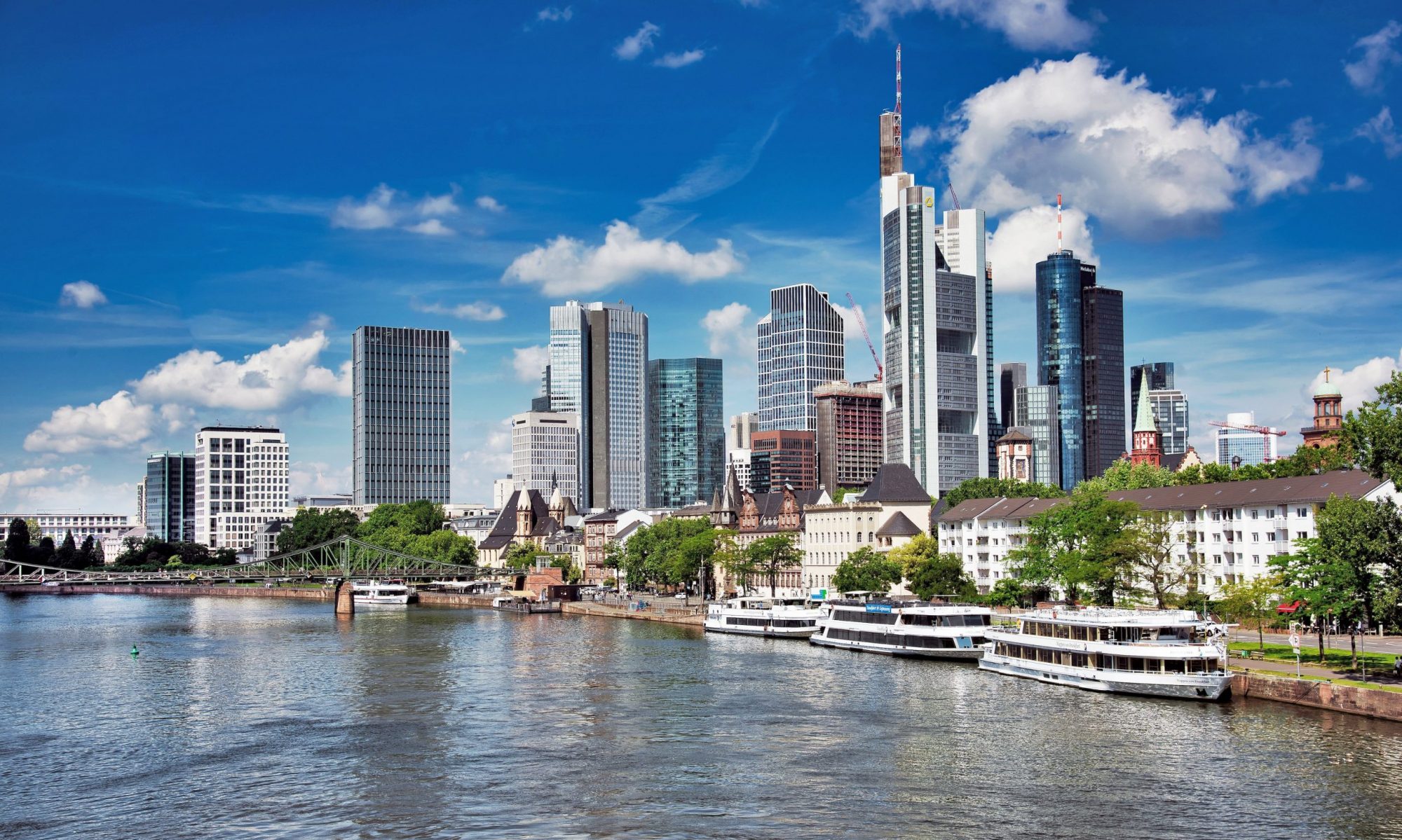
Foto: PIXABAY

Quelle: www.institutional-investment.de

FINANZPLATZ FRANKFURT & FINANZPLATZ LEICHTENSTEIN: „Ich bin überzeugt, dass Liechtenstein seinen Wachstumskurs in den nächsten fünf bis zehn Jahren nicht nur fortsetzen, sondern in den kommenden Jahren sogar beschleunigen wird“ (INTERVIEW – David Gamper, LAFV Liechtensteinischer Anlagefondsverband)

Finanzplatz Liechtenstein & Frankfurt, Fondsboutiquen, Family Offices, Fondsdomizil und Dialog in Deutschland – Markus Hill sprach für FINANZPLATZ FRANKFURT mit David Gamper, Geschäftsführer LAFV Liechtensteinischer Anlagefondsverband, über Themen wie Positionierung und Kooperation von Liechtenstein im europäischen Wettbewerb, Trends bei Alternative Investments und Regulierung. Zusätzlich gibt er aufgrund der aktuellen Bedeutung von Fondsauflagen bei Family Offices und Vermögensverwaltern noch einen kurzen Überblick über die weiteren Dialogangebote des Verbands am Finanzplatz Deutschland im Frühjahr 2026 und in London.

Hill: Welche Rolle spielt der Fondsstandort Liechtenstein im europäischen Markt aktuell – eher Nische oder aufstrebender Fondszentrum?
Gamper: Ich würde Liechtenstein als eine aufstrebende Nische bezeichnen. In Europa gibt es mit Luxemburg und Irland zwei große Fondszentren, die sich vor allem auf große, meist global tätige Asset Manager konzentrieren. White-Label-Fonds spielen dort, zumindest regulatorisch und auf Ebene der Aufsicht, eine untergeordnete Rolle. Genau hier setzt Liechtenstein an. Der Standort fokussiert sich auf optimale Rahmenbedingungen für Vermögensverwalter und Fondsboutiquen, die White-Label-Fonds auflegen möchten, sowie auf die Vermögensstrukturierung für wohlhabende Familien, häufig auch mit eigenen Family Offices. Das zeigt sich auch in der Statistik: Über 85% der in Liechtenstein domizilierten Fonds sind White-Label-Fonds – mit steigender Tendenz.

David Gamper, LAFV Liechtensteinischer Anlagefondsverband

Hill: Legen Sie derzeit in Liechtenstein viele Fonds für Family Offices auf?
Gamper: Ja, die Entwicklung in diesem Bereich war in der jüngsten Vergangenheit sehr positiv. Wir beobachten eine zunehmende Verunsicherung vermögender Personen, ausgelöst durch geopolitische Spannungen, hohe Staatsverschuldung in Europa und die Diskussionen um mögliche Steuererhöhungen. Liechtenstein hingegen weist keine Staatsschulden auf, hat die niedrigste Staatsquote Europas – also das Verhältnis von Staatsausgaben zum Bruttoinlandsprodukt – und entsprechend keine Notwendigkeit, Steuern zu erhöhen. Zudem sind Investmentfonds vollständig steuerbefreit. Politische Kontinuität und das AAA-Rating stärken das Vertrauen zusätzlich und machen den Standort insbesondere für langfristige Vermögensstrukturen attraktiv.

Hill: Wie entwickelt sich der Fondsstandort im Bereich alternativer Anlagen?
Gamper: Der Bereich der alternativen Anlagen wächst sehr stark. Sieben von zehn neu gegründeten Fonds sind derzeit Alternative Investment Funds (AIF). Das liegt einerseits daran, dass Fonds zur Vermögensstrukturierung nahezu ausschließlich in dieser Form aufgelegt werden. Andererseits profitieren AIF in Liechtenstein von einer besonders flexiblen Regulierung. Liechtenstein hat die von der EU bewusst vorgesehenen Spielräume genutzt und auf sogenanntes „Goldplating“ verzichtet, das man in anderen Fondsdomizilen häufig sieht. Ein weiterer entscheidender Faktor ist die Finanzmarktaufsicht Liechtenstein. Gerade bei komplexen AIF-Strukturen ist es für Fondsinitiatoren sehr wertvoll, frühzeitig in den Dialog mit der Aufsicht treten zu können. Diese kooperative Praxis wird sehr geschätzt und hat bereits zu mehreren Fondsgründungen geführt.

Markus Hill, FINANZPLATZ FRANKFURT AM MAIN

Hill: Welche Risiken könnten den Fondsstandort Liechtenstein mittelfristig bremsen?
Gamper: Wie alle Fondsplätze sind auch wir von geopolitischen Entwicklungen und deren Auswirkungen auf die Finanzmärkte abhängig. Darauf haben wir nur begrenzten Einfluss, müssen aber entsprechend vorbereitet sein. Ein weiteres Risiko liegt in der zunehmenden Regulierung auf europäischer Ebene. Umfangreiche Reportingpflichten und ständige Neuerungen in der Regulierung belasten kleinere Fondsgesellschaften, wie sie in Liechtenstein typisch sind, deutlich stärker als große internationale Anbieter. Wir stehen klar hinter sinnvoller Regulierung, die Anlegerschutz und Transparenz stärkt. In den vergangenen Jahren wurde hier jedoch teilweise über das Ziel hinausgeschossen. Wir hoffen daher, dass das angekündigte „Simplification Package“ wieder spürbare Entlastung bringt. Besonders wachsam müssen wir zudem in den Bereichen Geldwäscheprävention und Sanktionsumsetzung bleiben. Trotz sehr guter Ergebnisse bei den letzten Prüfungen arbeiten wir kontinuierlich an weiteren Verbesserungen, denn eine starke Reputation ist für einen kleinen Finanzplatz essenziell.

Hill: Sehen Sie Fachkräftemangel als limitierenden Faktor?
Gamper: Auch wir sind vom allgemeinen Arbeits- und Fachkräftemangel betroffen, von einem limitierenden Faktor kann jedoch nicht gesprochen werden. In anderen Finanzbranchen des Landes gibt es qualifiziertes Personal, das zunehmend auf die Fondsbranche aufmerksam wird, nicht zuletzt aufgrund ihres starken Wachstums. Zudem steigt das Interesse hochqualifizierter Fachkräfte aus dem nahegelegenen Finanzplatz Zürich sowie aus Deutschland. Insgesamt sehen wir derzeit eine ausgewogene Mischung aus Bedarf und verfügbaren Talenten.

Hill: Wo steht der Fondsstandort Liechtenstein in fünf bis zehn Jahren?
Gamper: Die Spezialisierung auf White-Label-Fonds war aus meiner Sicht der richtige strategische Schritt. Für diese Zielgruppe wurden optimale, teilweise sogar einzigartige Rahmenbedingungen geschaffen. Dass wir damit richtig liegen, zeigt auch das wachsende Interesse ausländischer Fondsgesellschaften. Nach der luxemburgischen Axxion hat auch Dirk Grosshans von Universal Investment an der Veranstaltung „Finanzplatz Frankfurt trifft Finanzplatz Liechtenstein“ am 18. November 2025 in Frankfurt angekündigt, ab dem ersten Quartal 2026 Fonds in Liechtenstein aufzulegen. Weitere Anbieter werden folgen. Ich bin daher überzeugt, dass Liechtenstein seinen Wachstumskurs in den nächsten fünf bis zehn Jahren nicht nur fortsetzen, sondern in den kommenden Jahren sogar beschleunigen wird. Es wird noch viel Positives zu berichten geben.

Hill: Welche Veranstaltungen stehen demnächst an?
Gamper: In Deutschland sind wir auf verschiedenen Veranstaltungen. Am 28. und 29. Januar 2026 laden wir wieder zum Dialog beim FONDS professionell KONGRESS in Mannheim ein. Interessierte können sich am Stand über den Fondsstandort informieren und mit Strukturierungsexperten über konkrete Fondsprojekte sprechen. Im Vortrag berichtet ein Fondsgründer über sein sehr erfolgreiches Fondsprojekt und seine positiven Erfahrungen in Liechtenstein. Am 21. und 28. April 2026 präsentieren wir uns wieder bei den Veranstaltungen des LAFV in München und Hamburg. Fondsgründer berichten über die einzigartigen Standortvorteile Liechtensteins und die steuerliche Komponente von liechtensteinischen Fonds wird beleuchtet. Verena Schlömer von der Finanzmarktaufsicht Liechtenstein wird Einblicke in den Zulassungs- und Aufsichtspraxis bei Fonds gewähren. In London findet die nächste Veranstaltung am 25. Juni 2026 statt. Das detaillierte Programm wird noch bekannt gegeben, im Fokus stehen jedoch die Standortvorteile und aktuellen Entwicklungen des Fondsplatzes Liechtenstein.

Hill: Vielen Dank für das Gespräch.

Dialog & Information:

FINANZPLATZ FRANKFURT AM MAIN auf LINKEDIN – KANAL

FINANZPLATZ FRANKFURT AM MAIN auf LINKEDIN – GRUPPE

FONDSBOUTIQUEN auf LINKEDIN – KANAL

Foto: PIXABAY

Quelle: www.institutional-investment.de