FINANCIAL CENTRE FRANKFURT: Frankfurt Spring & Investors – Events, Fressgass and Value Investing

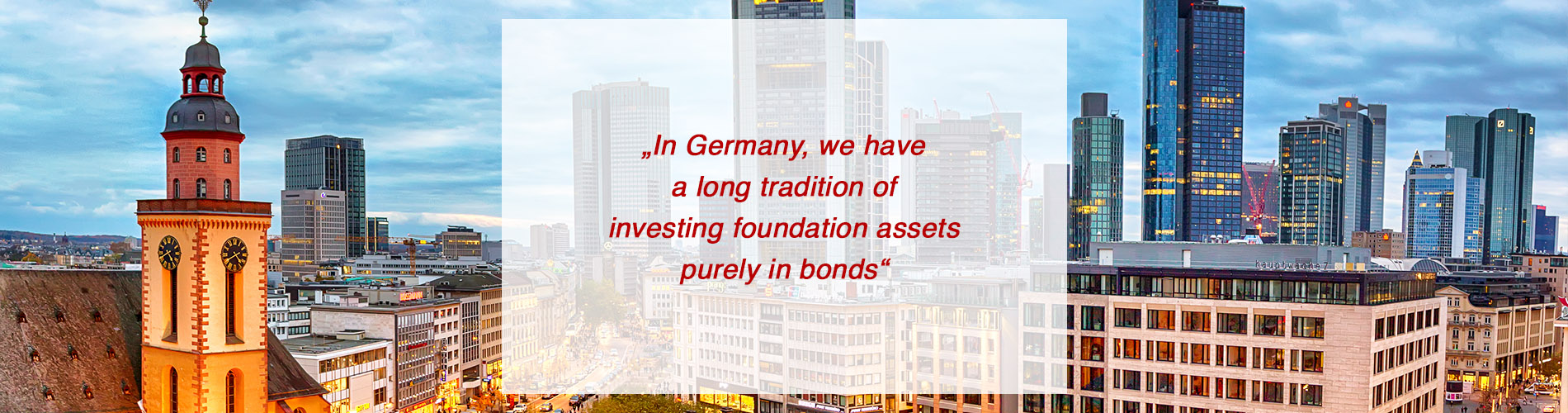
“It is good to rub and polish our mind against that of others” (Michel Eyquem de Montaigne). Frankfurt am Main, as a city, always offers sufficient reason for rubbing and polishing. On the one hand, against the background of topics such as Brexit, ECB policy, and the financial industry, the importance of the business location is given priority; on the other hand, the city is often wrongly accused of lacking attractiveness in areas such as culture and quality of life. Controversial views invite dialogue, so far so good. Frankfurt’s qualities as a central location and multiplier are undisputed when it comes to topics such as financial communication and financial industry events. In addition to well-known formats such as the BVI Asset Management Conference, Institutional Money Congress, or formats such as the German Equity Forum, there are a large number of lesser-known, smaller events. What are the differences between certain formats? When and where in spring will value investing fans enjoy and enjoy the exchange of ideas in the Main metropolis?

Formats of events

1. education & networking

Some events serve the exchange of ideas from industry to industry. Here the focus is more on expanding know-how and networking with participants from the financial industry. Especially for sponsors of such events, it is important at the beginning to sort out the exact character of these formats. Otherwise, the normal impression is created here: “More hunters than a game”. An investor then sits, so to speak, between three sales employees of product suppliers. A dialogue-free of compulsion and open to results often cannot develop here. One feels the intention and is upset. This is one of the reasons why many “real” investors increasingly stay away from such formats. A problem that many classic event organizers, not only in Frankfurt, have to struggle with. It is an unfortunate trend, as many of these formats offer very high-quality lectures and panel discussions. For sponsors who like to exchange ideas in the industry or who are looking for more visibility, these formats offer a good platform. The professional audience can be grateful if a “public-interest” task (diffusion of knowledge) is taken on by financial market players here, so to speak.

A disadvantaged group of sponsors is often foreign companies that have not thoroughly screened the market here and in the end unintentionally spent a substantial part of their marketing budget on large-format educational events, although they wanted to invest in business development. Visibility and market research seems to be less in demand for many of these addresses. What seems more interesting to these providers is the targeted, direct contact with investors, who are expected to sign “tickets” in the foreseeable future, once a relationship of trust has been established. This is a purpose for which many of the large events are not actually intended and with which the organizers can generally be overburdened. The support of “formats with a high scattering loss” is no problem for major players from abroad, companies with boutique character will lack the sustainable financial strength after a while to be able to pursue a market entry strategy in the long term. To be fair, it has to be said that most organizers of this event category emphasize the educational character and pure networking orientation of the event, at least in marketing materials. Perhaps one explanation for the suboptimal selection of formats among suppliers can simply be that the sales and marketing departments have not yet been sufficiently coordinated. The objectives of marketing / PR and sales managers do not necessarily have to be the same for structural reasons (example: criteria for measurability of success – internal discussion: press clipping, page impression versus “tickets”, sales, business development).
2. education & business development

Small, specialized events are a popular format for developing direct investor contact. These are organized by the product providers either internally or with external support. These formats are often invitation-only and participants are pre-filtered. In contrast to the above-mentioned “educational events”, which have a greater scattering loss with a purely business development objective, these events usually pursue the purpose of maintaining existing customers or acquiring new customers. Of course, there is always a core educational element and also the goal of gaining multipliers for your concern (business development). For many investors, the charm of such formats lies in the fact that you will find many professional colleagues at these events, with whom you can then exchange views on specialist topics on a small scale. All participants are also aware that the speakers want to present products or services. However, since it is often known from experience that here investors also exchange ideas directly with investors in a pleasant atmosphere, this is gladly accepted – as long as the sales staff of the product provider show sufficient tact in communication.

Spring 2018 – Value Investing, joy and the cultivated exchange of ideas

Examples of different formats dealing with Value Investing in spring: Prof. Dr. J. Carlos Jarillo of SIA Funds AG covers the topic “Strategic Investing, Value Investing & Fund Boutiques” on 19.4. (Transparency – MH-Kurzintro, “bias”). Topics such as the differences between private equity funds and classic liquid investment funds and family office long-term thinking will also be discussed. Dr. Hendrik Leber and his team from ACATIS Investment will organize the ACATIS Value Conference, a classic for value investors, on May 25. Frank Fischer from Shareholder Value AG will give the keynote speech at the Equity Forum spring conference (14.-15.5.), quoting the format: “Listed companies present their current business figures and outlook for the following financial year to selected investors, analysts, financial journalists, and other capital market players”. It is interesting to note that in the value investing sector, many product packages/approaches often complement each other, that there are variations, different worlds come together: The areas of the liquid and non-liquid investment world have many common intersections, at least at the “edges” (decision-making processes of investors, product selection, asset allocation, etc.).

The Value Investing Meeting of value DACH will take place in Frankfurt on 23.5., at the end of the event a completely different format for the professional exchange of ideas of people interested in value investing, in the organizer’s own words: “At the meetings, we will exchange ideas with each other in a relaxed atmosphere. We are out and about in various restaurants in different parts of the city of Frankfurt. In doing so, we also broaden our culinary horizons”. Coincidentally, the season for the Fressgassfest in Frankfurt begins on the same day, traditionally one of the first and best-known street festivals of the season – for friends of sun, wine, and conviviality a highlight of the year, not only for the financial industry. To begin with, let’s take up the remarks about an often seemingly critical metropolis – Frankfurt am Main, enjoyment, thinking outside the box and a cultivated exchange of ideas are by no means mutually exclusive!


Source: www.institutional-investment.de
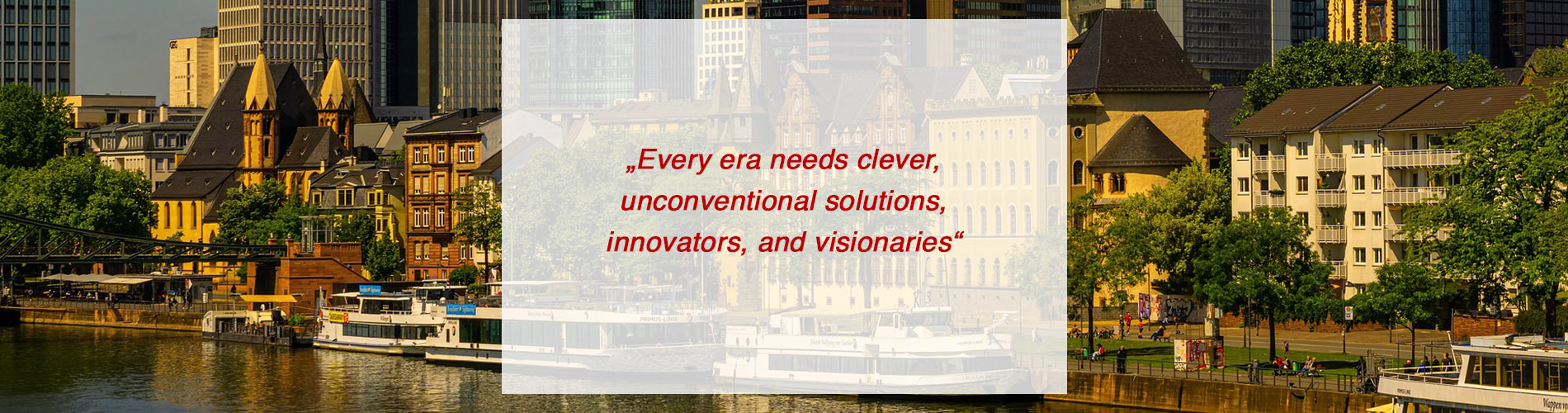
Photo: www.pixabay.com

FINANCIAL CENTRE FRANKFURT: “For the fund industry Frankfurt unlike Luxembourg is the location par excellence especially for product development, fund management and distribution” (Interview – Thomas Richter)

Frankfurt is the central location for the professional exchange of ideas in the fund industry in Germany. Events such as the BVI Asset Management Conference on the 6th of October are offering this year again the opportunity, to stay informed of all the current developments in the industry. Markus Hill spoke in the name of FONDSBOUTIQUEN.DE to Thomas Richter, CEO of The German Fund Association BVI, about the conference topics, current affairs and as well about the special “charm” the city Frankfurt has to offer as a venue.

Hill: Mr. Richter, on the 6th of October the BVI Asset Management Conference takes place in Frankfurt. What distinguishes this industry event from other formats? Which topics are this years priorities?

Richter: The BVI Asset Management Conference is meanwhile an industry gathering/networking of the year. It gives an overview on current developments at the capital market and about the regulatory and strategic challenges the industry is facing. It is not a trade fair, rather a non-commercial platform. This year, among others ex-constitutionalists Udo Di Fabio, Head of Asset Management at the European Commission Sven Gentner and Consumer Protection Chairman Klaus Müller are among the guests. The topics range from the current challenges in Europe about the risk management of pension funds right up to cyber security and digitalization trends in fund sales.

Hill: Frankfurt is an attractive location for sharing and exchanging expertise in the fund industry. Many fund companies have their headquarters here. What is it in your eyes that makes the “Main metropolis” so attractive to many industry peers? With the BREXIT in mind is there still additional potential for this location?

Richter: Frankfurt can build on many strengths. The city plays an important role in Europe in regard to the monetary policy and financial market regulations. It has evolved in recent years to the home of national and international financial organizations and regulatory agencies such as: ECB, Federal Financial Supervisory Authority (BaFin), German Central Bank and the EU insurance supervisory EIOPA which all are already here. Whether Frankfurt attracts more financial companies from the Thames to the Main after the BREXIT, remains a question. The density is already high: Nowhere else in Germany are more companies from the financial industry located than in Frankfurt. For the fund industry Frankfurt unlike Luxembourg is the location par excellence especially for product development, fund management and distribution.

Hill: At present which topics are your main focus? What is the focal point of your activities in the next 12 months?

Richter: The topics on pension plan and retirement arrangements are highly up to date. After the summer break the Federal Ministry of Labour and Social Affairs (BMAS) intends to submit a pension policy concept. That should be exciting, because for the promotion of occupational pensions, BVI receivables such as the opting out or the target pension are currently being discussed in politics. At EU level, the financial market policy MiFID II and the PRIIPs-
Regulation are perennial favorites.


Source: www.institutional-investment.de
Photo: www.pixabay.de

FINANCIAL CENTRE FRANKFURT:“Frankfurt can build on many strengths” (Interview – Thomas Richter)

Frankfurt is the central location for the professional exchange of ideas of the fund industry in Germany. Formats such as the BVI Asset Management Conference on October 1 will again offer the opportunity to find out about current developments in the industry. Markus Hill spoke on behalf of FONDSBOUTIQUEN.DE with Thomas Richter, Chief Executive of the German fund association BVI, about conference content, current topics, and the special “charm” of the city Frankfurt as a venue.

Hill: Mr. Richter, the BVI Asset Management Conference will again be held in Frankfurt on October 1. What makes this conference different from other events?

Richter: The BVI Asset Management Conference has developed into the industry meeting of the year. It provides an overview of current developments in the capital market and of the regulatory and strategic challenges facing the industry. It is not a trade fair and as a non-commercial platform, it regularly convinces with its programme and speakers. This year, for example, ECB Chief Economist Peter Praet, BaFin President Felix Hufeld, Hessian Economics Minister Tarek Al-Wazir, and EU Member of Parliament Burkhard Balz are among the participants. We are expecting 500 participants again.

Hill: Frankfurt is an attractive location for the exchange of ideas in the fund industry. What do you think makes the Main metropolis so attractive for many colleagues in the industry?

Richter: Frankfurt can build on many strengths. In recent years, the city has developed into the home of national and international financial organizations and supervisory authorities. Whether ECB, BaFin, Bundesbank, or the EU insurance supervisory authority EIOPA – Frankfurt plays a decisive role in Europe concerning monetary policy and financial market regulation. Nowhere else in Germany are there more companies from the financial sector than in Frankfurt. In 2014, around 200 banks were based here, plus 34 representative offices of foreign institutions – not to mention Deutsche Börse as one of the world’s leading exchange and settlement operators. The investment companies are also strong here. More than half of the BVI members are based in Frankfurt. Over 70 percent of the 2.6 trillion euros that the fund industry manages for customers in Germany are managed from here. In contrast to Luxembourg, where funds are launched, Frankfurt is the location for product development, fund management, and sales.

Hill: What topics are you currently working on intensively?

Richter: The investment tax reform, Solvency II and MiFID II are the current topics. The latter regulates, among other things, commission consulting. The debate on systemic relevance is also a constant issue. Indeed, FSB and IOSCO have now realized that the business of asset managers is more relevant than their size or that of their funds. But the issue will remain on the regulatory and political agenda.

Hill: Thank you very much for the interview.


Source: www.institutional-investment.de

Photo: www.pixabay.com

FINANCIAL CENTRE FRANKFURT:“Frankfurt’s Autumn” for family offices, asset managers and foundations

“Speak, that I may see you” (Socrates). This or something similar could be the motto under which the asset management industry and investors frequently meet in Frankfurt. This autumn seems promising. Interestingly, the voice of the independent will be heard more often: Family offices, asset managers and foundations are entering into a fruitful dialog, three examples of many: “Management Forum Asset Management” (Frankfurt School of Finance & Management), “Frankfurter Dialog for Family Offices and Asset Management ” (Heuking Kühn Lüer Wojtek) and “trend forum and Asset Management” (portfolio Verlagsgesellschaft). To be fair, one could also refer to the Düsseldorf event “German Asset Management Day” (VuV – Verband unabhängiger Vermögensverwalter Deutschland e.V./ VuV Association of Independent Asset Managers), which is organized from Frankfurt and will also take place in November. What interesting topics are discussed in Frankfurt, for example? What are the interesting keywords for the dialog partners?

Low-interest phase

Plant emergency – whether explicitly in the meeting program mentioned or by lecture and discussion to expect: Under these keywords, one can summarize many of the meeting elements, which concern themselves with the range investment and products. Whether institutional or semi-institutional investors or private investors – solutions are sought. Procyclic versus risk management – flight from bonds into risky investments? Is the next foundation for a financial bubble now being laid or will there be a constructive, know-how-based adjustment in the investment behavior of investors?

Family offices and asset managers

Not only this autumn, but these target groups will also be strongly courted by the product supplier side. It is interesting to note that family offices – often forgetting the “pseudo-scientific” use of the definition of the family office – also want to increasingly promote their products. If the client has done well with this in the past and there is transparency for their clients regarding possible conflicts of interest, the request appears legitimate. As long as there are still many different forms and intermediate forms of family offices and no clarity of terminology exists, the smooth transition between asset management and consulting, controlling, and reporting will remain an interesting area of discussion. Family offices offer asset management, asset managers offer family office services – may the target group-oriented solutions be revealed in competition as discovery processes (F. A. von Hayek). Untouched by this, neutral, equally independent family offices “without” products will continue to look after their clients.

Foundations

Asset emergency and product solutions move foundation decision-makers. A relativization may be allowed: Perhaps there is no lack of product offerings, but perhaps a lack of time and know-how in some foundations? Due Diligence needs time. Foundation size and volume in the investment area can create a bottleneck in terms of personnel resources for the examination of the diverse offerings in the market. The financial industry may be overestimating itself, or perhaps it has learned that the world is not just about capital investment for foundation decision-makers. Mission Investing – the smooth transition between fulfilling the foundation’s purpose, fundraising, and sustainability in the holistic sense of the foundation’s mission are also points that are intensively discussed at Frankfurt events. A positive trend: Foundations will gradually discover which product providers not only pursue short-term sales interests but also have a longer-term partnership based on a competitive product offering.

Regulation

AIFM, MIFID, KAGB, and various other abbreviations of the wide world of regulation will have room for discussion at many events in Frankfurt. Many of the KVGen such as Universal-Investment, Hansainvest, Ampega, and other well-known addresses are well known among independent asset managers, family offices, and foundations. For independent asset managers questions of consulting liability can be in the foreground. Fund advisory, fund management and club deals (e.g. real estate) are topics of discussion that meet with a positive response from all three target groups. The VuV and also many law firms in Frankfurt have an expertise advantage here due to the “regulatory dynamics” (interpretation etc.) in these fields.

Independence and trust

Of course, there will always be the group-bound world of product suppliers. Banks and capital investment companies of various sizes offer recognized solutions for the target groups. This class of providers is addressed in part by the events. The not group-bound, independent product offerers stand however clearly in the foreground of the “Frankfurt autumn”. The author of these lines has carried out his survey of this group of investors (in addition to funds of funds management, family office, and private banking) as part of the “1st Funds Boutique Panel” – interestingly enough, independents often like to buy independents. An unambiguous interpretation should be deferred here – in addition to the element of performance, the element of trust in the areas of specialization and long-term thinking can also play a role. Competitive performance is naturally assumed here.

Conclusion

Frankfurt is an excellent location for the professional exchange of ideas at a high level. National and international suppliers and investors meet here. The networking of different providers and target groups is increasing – product packaging, asset classes, and customer segments are losing their discriminatory power in the discussion. The banking crisis has led to controversial discussions, but perhaps a second, “holistic” level is developing in the culture of discussion alongside the established product and event-level – the dissolution of the rigid target group philosophy on the provider side: perhaps from “Who can I sell my product to?” to “With whom do I want to build a good business relationship in the long term? Established industry and the “independents” would sustainably pursue location marketing!


Source: www.institutional-investment.de
Photo: www.pixabay.com